Is MSG Bad for You? The Evidence vs the Myth
MSG might be the most argued-about ingredient of the last fifty years — and the gap between its reputation and its evidence is unusually wide. Here’s the story straight: what monosodium glutamate is, where the fear came from, what the science actually found, where it hides on Canadian labels (including the names that aren’t “MSG”), and how to avoid it cleanly if you still prefer to.
Prefer the one-tap route? Add a custom watch for it in Tarlo and scan — the history lesson below is optional.
What MSG is
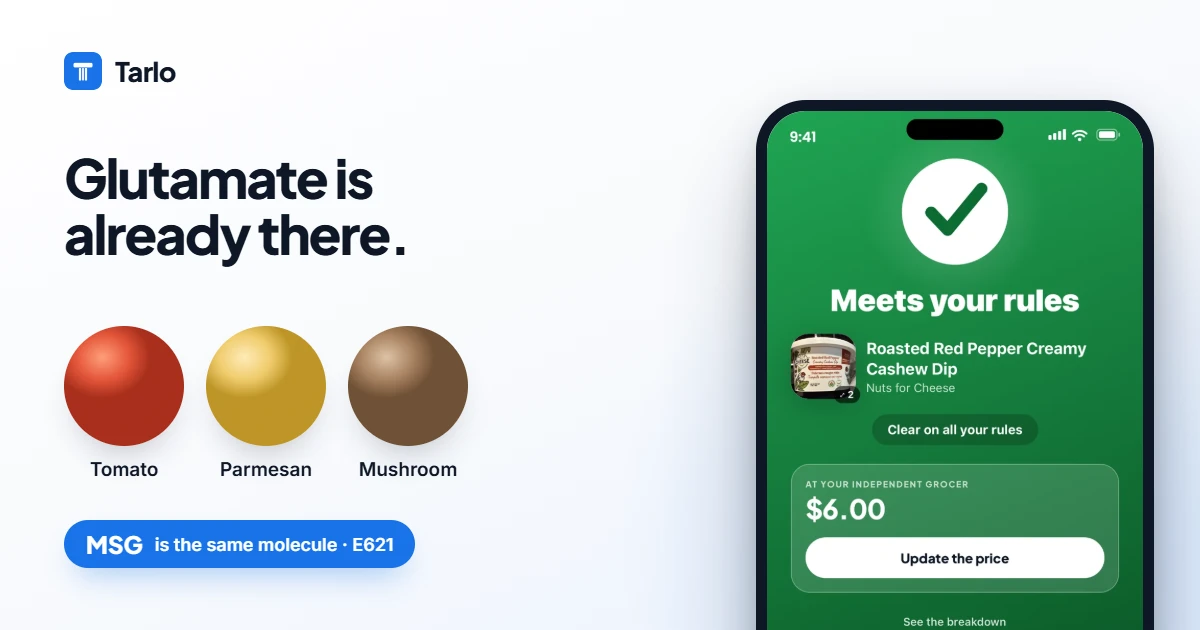
Monosodium glutamate is the sodium salt of glutamic acid — an amino acid that occurs naturally in tomatoes, parmesan, mushrooms, seaweed and breast milk. Your body treats the glutamate in MSG identically to the glutamate in a ripe tomato; chemically there is no difference. MSG’s job is umami — the savoury fifth taste — and it delivers it cheaply, which is why it’s in snack seasonings, instant noodles, bouillon, soups and countless restaurant kitchens.
It was isolated from seaweed broth by a Japanese chemist in 1908 and has been manufactured by fermentation (similar to how vinegar or yogurt is made) for decades.
Where the fear came from
In 1968, a letter to the New England Journal of Medicine described symptoms after eating at Chinese restaurants and speculated MSG might be the cause. The phrase “Chinese restaurant syndrome” stuck, media amplified it, and decades of “No MSG” signs followed. Researchers and food historians have since documented how thin that original foundation was — a speculative letter, not a study — and how much the panic tracked ethnic stereotypes rather than data. The term itself is now widely considered discredited.
What the evidence says
Controlled studies have repeatedly failed to reproduce “MSG symptom complex” reliably: in double-blind, placebo-controlled trials, people who identify as MSG-sensitive generally can’t distinguish MSG from placebo at normal food doses. Very large doses on an empty stomach, without food, have produced mild transient symptoms in a small subset — conditions that don’t resemble eating a seasoned meal.
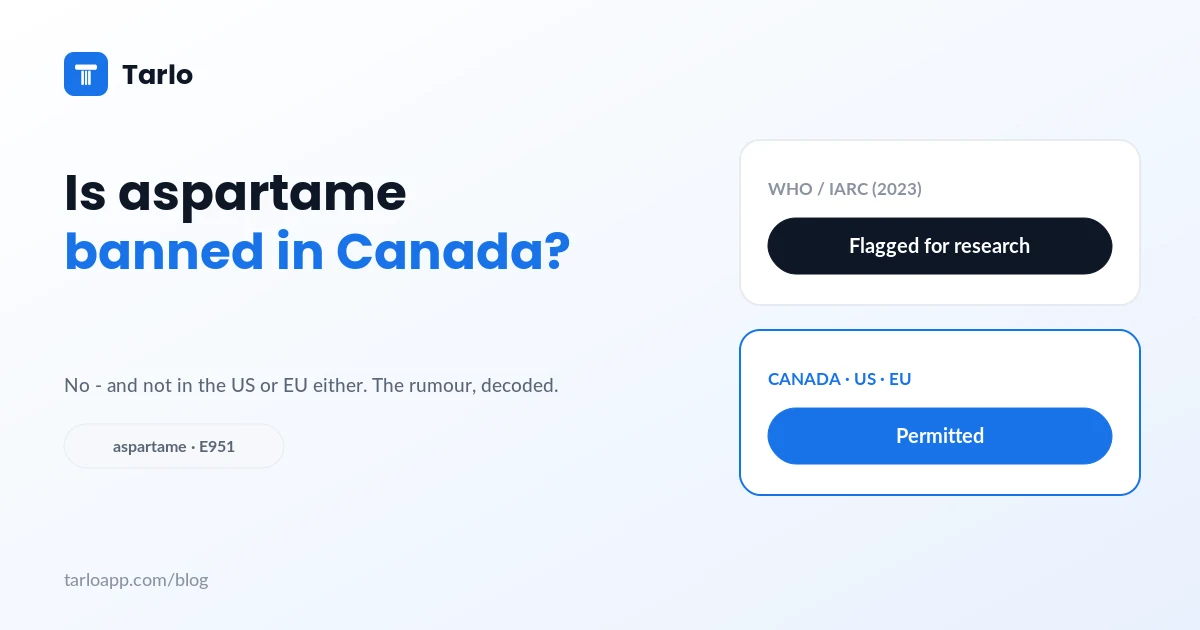
Regulators reflect this: Health Canada permits MSG and does not classify it as a health hazard at typical intakes; the US FDA lists it as GRAS (“generally recognized as safe”); JECFA places no numerical limit on its ADI. Among mainstream food-safety bodies, MSG is about as uncontroversial as additives get — the controversy lives almost entirely in public perception.
None of which obliges you to eat it. Some people report individual reactions regardless of the trial data, and “I’d rather not” needs no scientific licence. That’s what a personal rule is for.
The sodium angle
Here’s the practical irony: MSG contains about one-third the sodium of table salt, and because glutamate amplifies savoury flavour, small amounts can let a recipe cut total salt while tasting just as seasoned. Some public-health researchers have suggested MSG as a sodium-reduction tool.
For shoppers, though, the products MSG lives in — instant noodles, seasoned chips, soup bases — are usually high in sodium overall anyway. Which means the more useful flag on those products is often Canada’s “high in sodium” front-of-package threshold, not the MSG itself. Tarlo checks both if you want both.
MSG by other names
The reason label-reading for MSG frustrates people: free glutamate arrives under many ingredient names, and “No MSG added” claims can sit on products full of them:
| Ingredient | Contains free glutamate? |
|---|---|
| Monosodium glutamate | Yes — MSG itself |
| Hydrolyzed vegetable/soy/corn protein | Yes |
| Yeast extract / autolyzed yeast | Yes |
| Soy sauce, miso, parmesan | Yes (naturally) |
| Tomato paste, mushroom powder | Yes (naturally) |
Canadian labelling requires MSG itself to be declared by name; the other sources are declared under their own names. If your concern is added MSG specifically, look for the first row. If it’s glutamate broadly, you’re effectively avoiding umami-rich foods — a much bigger net than most people intend.
How to spot it on Canadian labels
On Canadian packages, look for “monosodium glutamate” (English) or “glutamate monosodique” (French) in the ingredient list — it must be named. Scanning is faster: Tarlo reads the full ingredient text in both languages, so a custom rule catches it without you squinting at seasoning-dust fine print. And because most MSG carriers are also sodium-heavy, the built-in high-in-sodium rule (using Health Canada’s thresholds) often flags the same products for a reason every regulator does agree on.
Frequently asked questions
Is MSG banned anywhere?
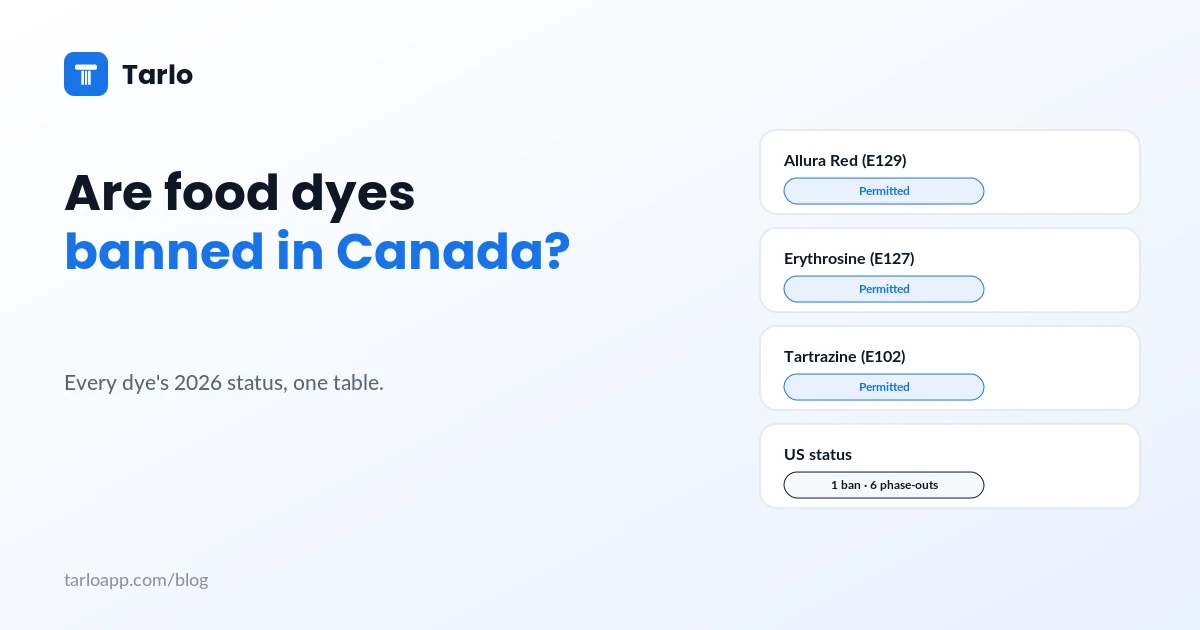
No major food regulator bans MSG. Canada, the US, the EU, Australia/NZ and JECFA all permit it.
Is “No MSG” on a menu or package meaningful?
Partially. It usually means no added monosodium glutamate — but the dish or product can still contain yeast extract, hydrolyzed proteins, soy sauce or parmesan, all naturally rich in the same glutamate.
I get headaches after certain meals. Could it be MSG?
Blinded studies suggest MSG is rarely the culprit at food doses, but individual experiences vary and meals have many variables (sodium load, alcohol, dehydration). If a pattern concerns you, a clinician — not a label — is the right resource. Meanwhile, avoiding it is easy enough to set as a rule.
Does Tarlo flag MSG by default?
No — the default rules are synthetic dyes and glucose-fructose. MSG is a preference you can add; Tarlo will then check every scan for it in both label languages.
Sources
- Health Canada — food additives and MSG position: canada.ca
- US FDA — Questions and answers on MSG (GRAS status).
- Obayashi & Nagamura (2016), Journal of Headache and Pain — systematic review of MSG and headache in blinded trials.
Tarlo reflects the rules you turn on and is for general information only — it is not medical or dietary advice. Regulatory details are Canadian and current as of the date above; always verify the product's physical label.