Banned in the US, Legal in Canada — and the Reverse (2026)
“Banned in Europe but legal in America” lists go viral every year — but the more useful comparison for Canadian shoppers is the quieter one across our own border. The US and Canada genuinely disagree on several ingredients, in both directions: things the US has banned that Canada permits, and things Canada prohibited long ago that remain federally legal in American food. Here’s the 2026 scorecard, with the reasoning on each side.
Checking your own cart against any of these takes one scan: Tarlo reads the full bilingual ingredient list on any Canadian barcode.
The scorecard
| Ingredient | United States | Canada |
|---|---|---|
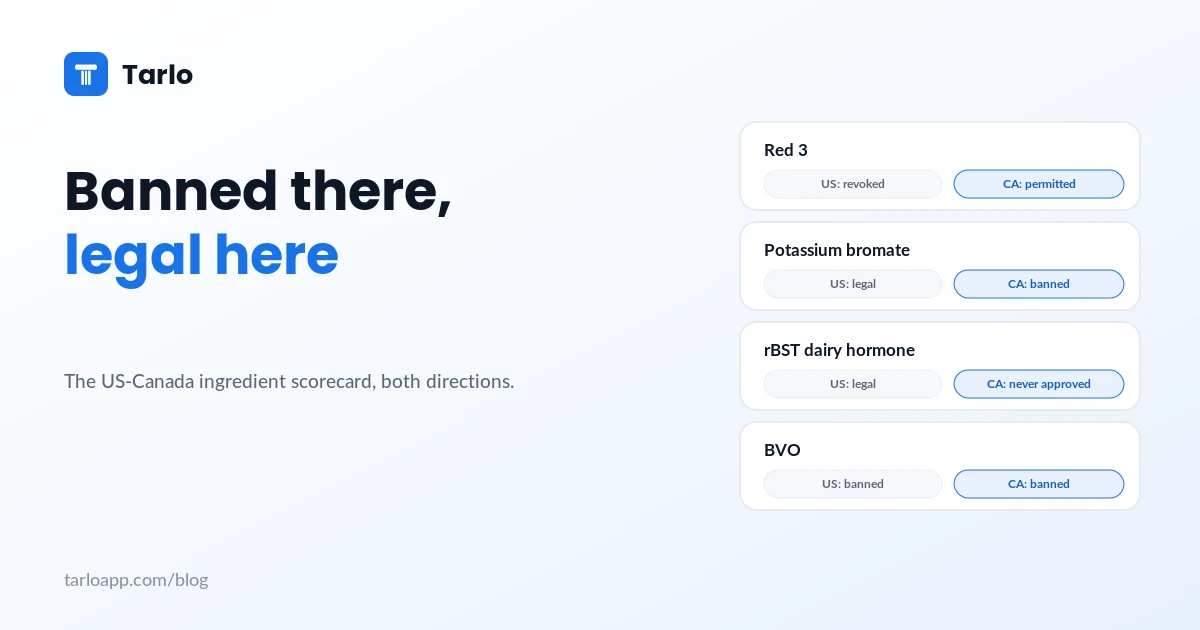
| Red 3 (erythrosine) | Revoked (food deadline Jan 2027) | Permitted |
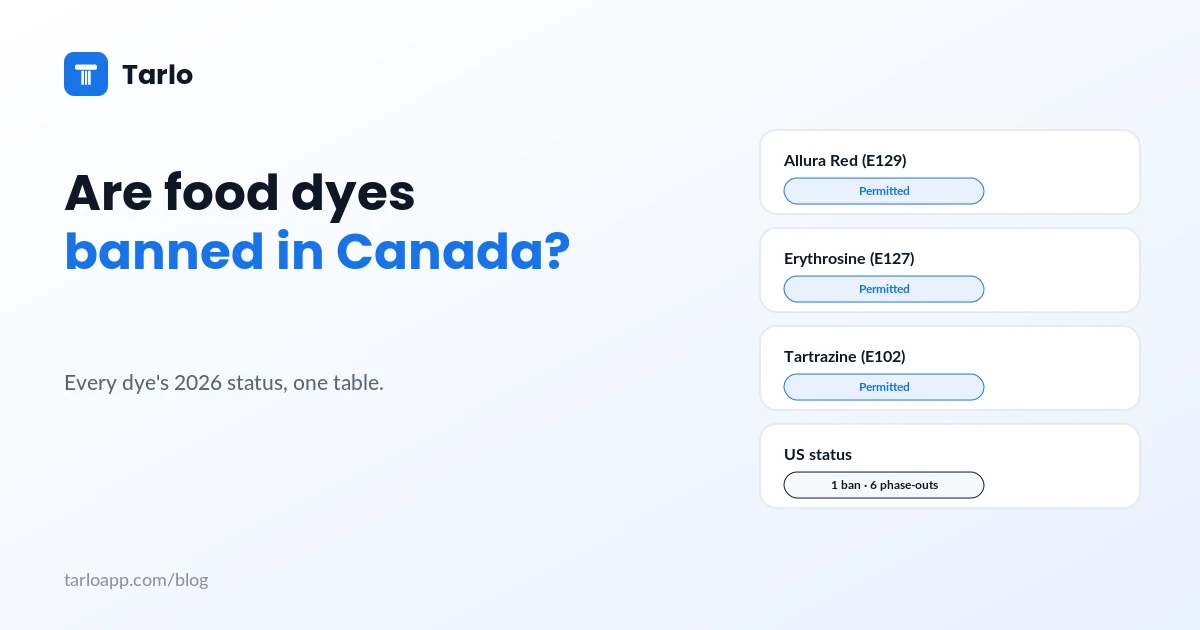
| Red 40, Yellow 5/6, Blues | Voluntary phase-out (2026–27) | Permitted |
| Potassium bromate (flour) | Legal federally (state bans emerging) | Prohibited — long-standing |
| rBST/rBGH (dairy hormone) | Legal | Never approved |
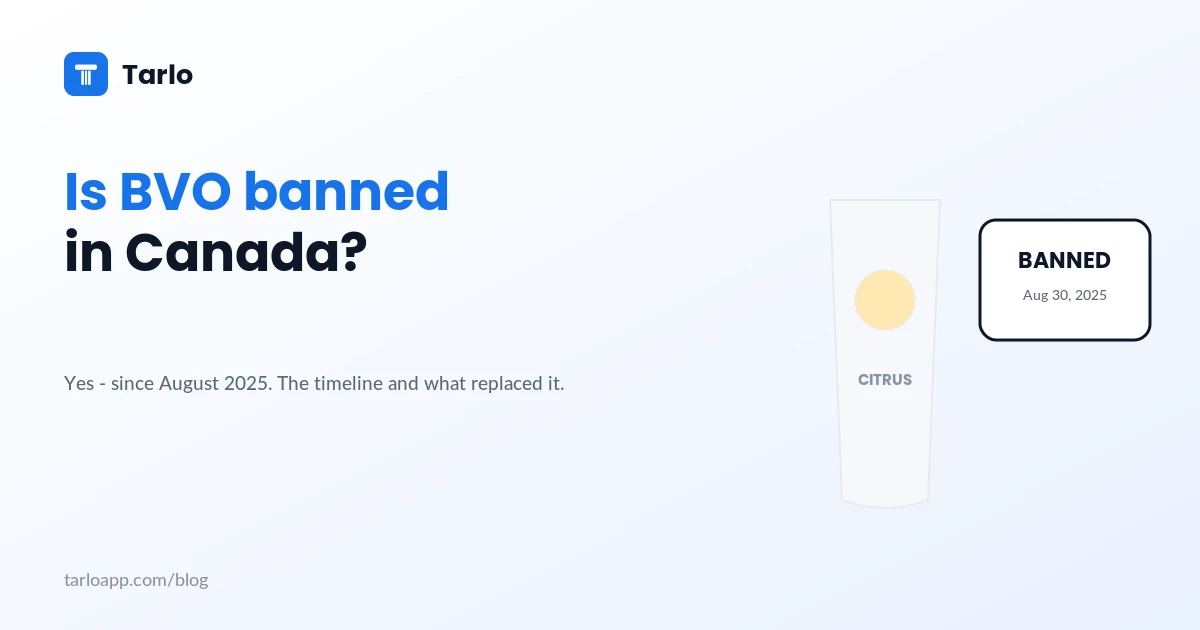
| Brominated vegetable oil | Banned (2024→) | Banned (transition ended Aug 2025) |
| Titanium dioxide | Legal (state pressure) | Permitted (reviewed, kept) |
Banned in the US, legal in Canada
Red 3 is the headline case: the FDA revoked it in January 2025 under a legal rule (the Delaney Clause) that mandates removal when an additive causes cancer in animals — even via mechanisms accepted as irrelevant to humans. Health Canada reviewed the same rat data and kept erythrosine permitted. The six phase-out dyes (Red 40 and family) are softer: not banned even in the US, but being pressured out — while Canada holds its position. Net effect through 2027: some products will be dye-free in Buffalo and dyed in Burlington, Ontario.
Banned in Canada, legal in the US
The reverse column surprises people. Potassium bromate — a flour “improver” that strengthens dough — has been prohibited in Canada for decades (with the EU, UK, Brazil and dozens of others), based on animal carcinogenicity, yet remains federally legal in US baking, largely because the FDA hasn’t formally re-reviewed it since the 1970s; California’s ban takes effect in 2027, and other states are moving. rBST/rBGH, the synthetic growth hormone that boosts milk yield, was never approved in Canada (Health Canada refused in 1999, citing animal-welfare effects) but is used in parts of the US dairy herd. Two of the classic “banned in Europe” list items are, quietly, banned-in-Canada items too — Canadian bread and milk are bromate-free and rBST-free by law, not by brand promise.
Banned in both, recently
BVO — brominated vegetable oil — is the rare synchronized move: Canada’s revocation completed August 2025, the US ban finalized on a similar timeline. The citrus-soda emulsifier is now gone from North American shelves in both directions.
Why two similar countries disagree
Three structural reasons, visible in every row. Different legal triggers — the US Delaney Clause forces bans on animal-cancer findings regardless of human relevance; Canada weighs human-relevant risk case by case (hence Red 3 splitting one way, while Canada’s precautionary rBST refusal split the other). Different review cycles — bromate persists in the US substantially because nobody has formally re-opened the file since 1973. Different pressure systems — US state laws and consumer campaigns now move faster than the FDA; Canada’s system moves as one federal decision. Neither country is simply “stricter” — each is stricter somewhere, which is exactly why border-crossing food advice misleads in both directions.
Frequently asked questions
So is Canadian food safer than American food?
Neither direction holds universally — Canada is stricter on bromate and rBST, the US is now stricter on Red 3 and (in practice) dyes. “Safer” depends on which ingredients you care about — which is the entire argument for shopping by your own rules.
Do US products sold in Canada follow US or Canadian rules?
Canadian rules — anything sold here must comply here (bromate-free, BVO-free, bilingual labels). The reverse also holds; that’s why the same brand differs across the border.
Which of these can I actually check on a label?
All the additives (bromate would appear in ingredients; dyes are named individually). rBST is a production practice, not an ingredient — it never appears on a label; in Canada you don’t need it to, since it was never approved.
Will Canada ban the dyes if the US phase-out completes?
No signal of it — Health Canada just re-affirmed Red 3. Market forces may do quietly what regulation doesn’t: one North American recipe, dye-free. Status page stays current.
Sources
Tarlo reflects the rules you turn on and is for general information only — it is not medical or dietary advice. Regulatory details are Canadian and current as of the date above; always verify the product's physical label.