Is Red Dye 3 Banned in Canada? (2026 Answer)
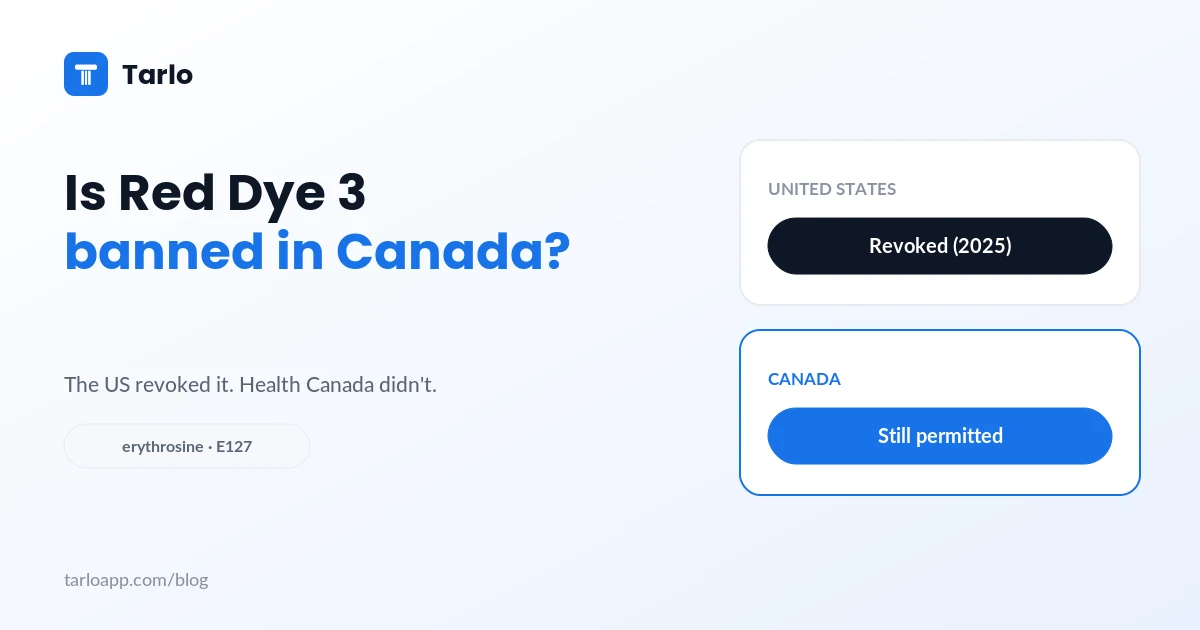
No — Red Dye 3 is not banned in Canada. The US FDA revoked its food authorization in January 2025, but Health Canada reviewed the same evidence and continues to permit erythrosine in Canadian food. If you saw the American headlines and checked your own pantry, here’s exactly where the two countries split, why, and what you can do about it on a Canadian shelf.
Want it flagged automatically? Tarlo’s synthetic-dyes rule catches erythrosine (E127) on any Canadian barcode, free.
The short version
| United States | Canada | |
|---|---|---|
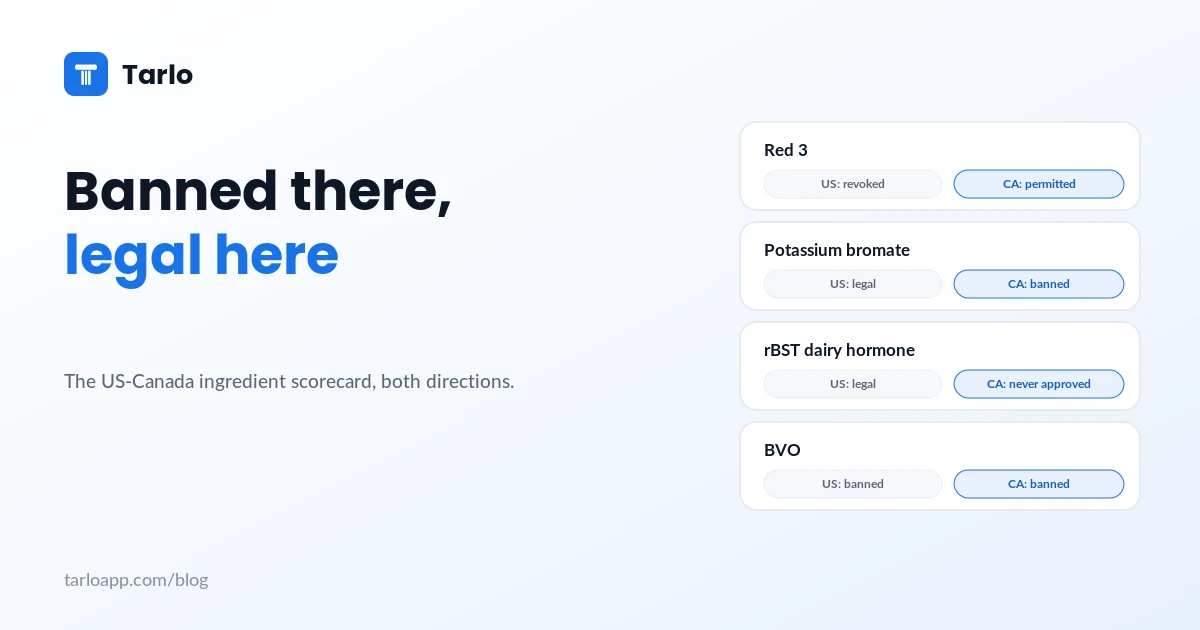
| Status | Revoked — FDA order, January 2025 | Permitted — Health Canada reviewed and kept it |
| Food deadline | Reformulate by January 2027 | No change |
| Label name | Red 3 / FD&C Red No. 3 | Erythrosine (EN) / Érythrosine (FR) |
| Code | — | E127 |
So a candy that must drop Red 3 for the US market can legally keep it in its Canadian formulation — one more case where the same product differs across the border.
What the US actually did
In January 2025 the FDA revoked the authorization for FD&C Red No. 3 in foods and ingested drugs, with food compliance required by January 2027. The legal trigger: decades-old studies in which very high doses caused thyroid tumours in male rats, via a hormonal mechanism scientists broadly agree doesn’t operate in humans. US law (the Delaney Clause) requires revocation of any additive shown to cause cancer in animals regardless of human relevance — so the FDA acted on the legal standard, while stating the dye isn’t considered a human risk at real intakes.
Why Canada didn’t follow
Health Canada re-examined the evidence after the US decision and concluded that at the levels permitted in Canadian food, erythrosine poses no risk to the general population — and that the rat mechanism doesn’t translate to humans. Canada has no Delaney-style automatic trigger, so the science judgment, not a legal formula, decides. Health Canada has said it will act if new evidence shows a human risk.
Familiar pattern for readers of this blog: it’s the titanium dioxide story in reverse colours — same data, different regulatory philosophy. Europe, Australia and New Zealand also restrict Red 3 more tightly than Canada does.
Where Red 3 shows up in Canada
Erythrosine was never as common as Allura Red — it’s a niche pink-red used mainly in candied and maraschino cherries, some candies and icings, cake-decorating products, and some medications. Since 2016, Canadian labels must name it individually: look for “erythrosine” or “érythrosine” in the ingredient list. Many manufacturers reformulated away from it years ago for cost and marketing reasons, and US-driven reformulation will shrink it further — but “shrinking” isn’t “gone,” and Canadian-market versions can lag their US twins.
How to avoid it here
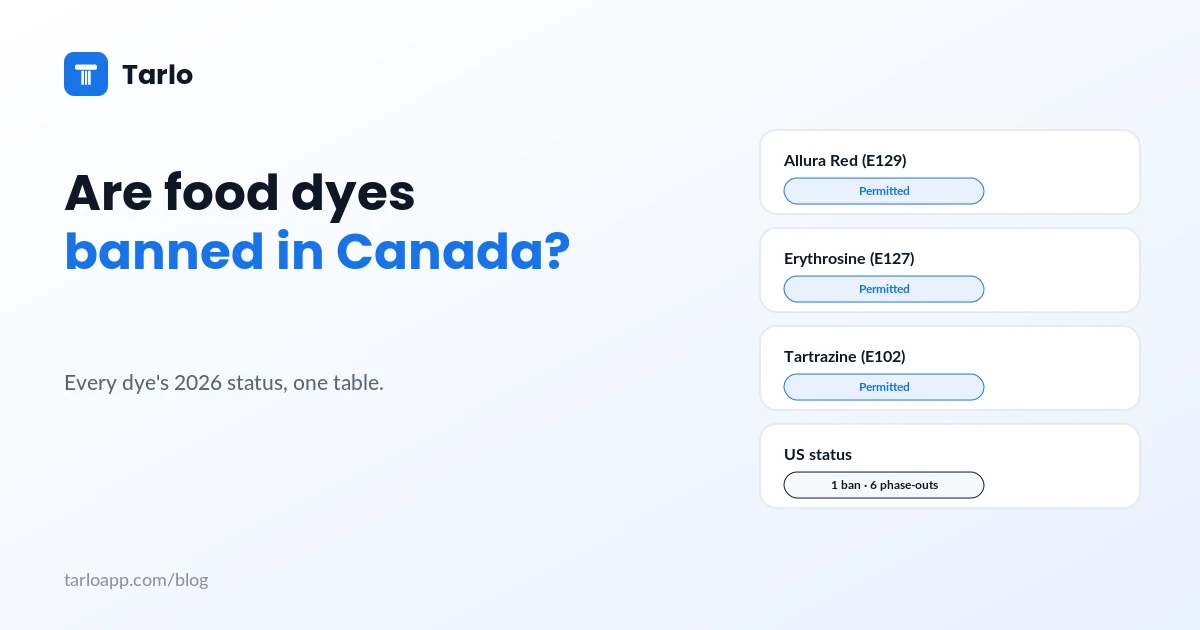
The label check is the word erythrosine; the faster route is a scan. In Tarlo, the synthetic dyes preset covers the whole colour family — E127 included, both official languages — and a fail names the exact trigger, with dye-free picks from the same shelf. For the status of the rest of the family, see are food dyes banned in Canada?
Frequently asked questions
Is Red 3 the same as Red 40?
No — different dyes, different situations. Red 3 (erythrosine) is the one the FDA revoked; Red 40 (Allura Red) remains authorized in the US (under a voluntary phase-out push) and permitted in Canada.
Will Canadian products lose Red 3 anyway?
Largely, yes — most brands run one North American recipe once the US deadline bites. But formulations lag and imports vary, so the Canadian label (or a scan) remains the only reliable check.
Does “banned in the US” mean it’s dangerous?
The FDA itself said the revocation followed a legal requirement based on rat studies, not evidence of human harm at food doses. Reasonable shoppers still choose to avoid it — that’s what your own rules are for.
What about Red 3 in medicine and cosmetics in Canada?
Still permitted here as well. The US revocation covered ingested drugs too (by 2028); Canada’s review covered food and drugs and kept both.
Sources
Tarlo reflects the rules you turn on and is for general information only — it is not medical or dietary advice. Regulatory details are Canadian and current as of the date above; always verify the product's physical label.