Is BVO Banned in Canada? Yes — Here's the Timeline
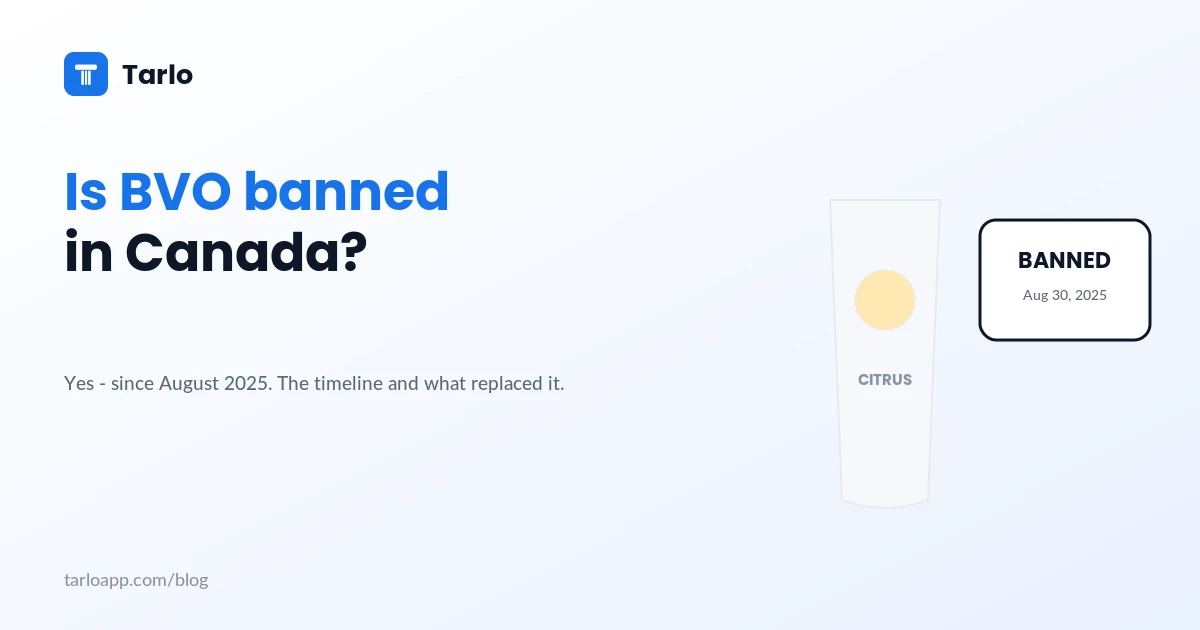
Yes — BVO is banned in Canada. Health Canada revoked brominated vegetable oil’s authorization as a food additive, and the transition period ended on August 30, 2025; since then it cannot legally be used in foods sold here. The US finalized its own ban on a similar timeline. For once, the cross-border answer is the same in both directions — here’s what BVO was, why regulators moved, and the fine print worth knowing.
Checking a specific drink? Tarlo reads the full ingredient list on any barcode — old stock included.
What BVO was
Brominated vegetable oil is (was) vegetable oil chemically bonded with bromine, used since the 1930s for one job: keeping citrus flavour oils evenly suspended in soft drinks and sports drinks so the flavour doesn’t separate and float. It appeared on Canadian labels as “brominated vegetable oil” (huile végétale bromée), mostly in citrus-flavoured sodas and some sports drinks. Never widespread — a handful of formulations — but persistent.
The ban timeline
| When | What happened |
|---|---|
| 2022–2023 | Health Canada re-assessed BVO; new rodent data raised concerns |
| 2024 | Health Canada revoked BVO’s food-additive authorization; the US FDA finalized its own revocation the same year |
| August 30, 2025 | Canadian transition period ended — BVO no longer permitted in foods sold in Canada |
| 2026 | US compliance also complete; BVO is effectively gone from North American drinks |
Why regulators acted
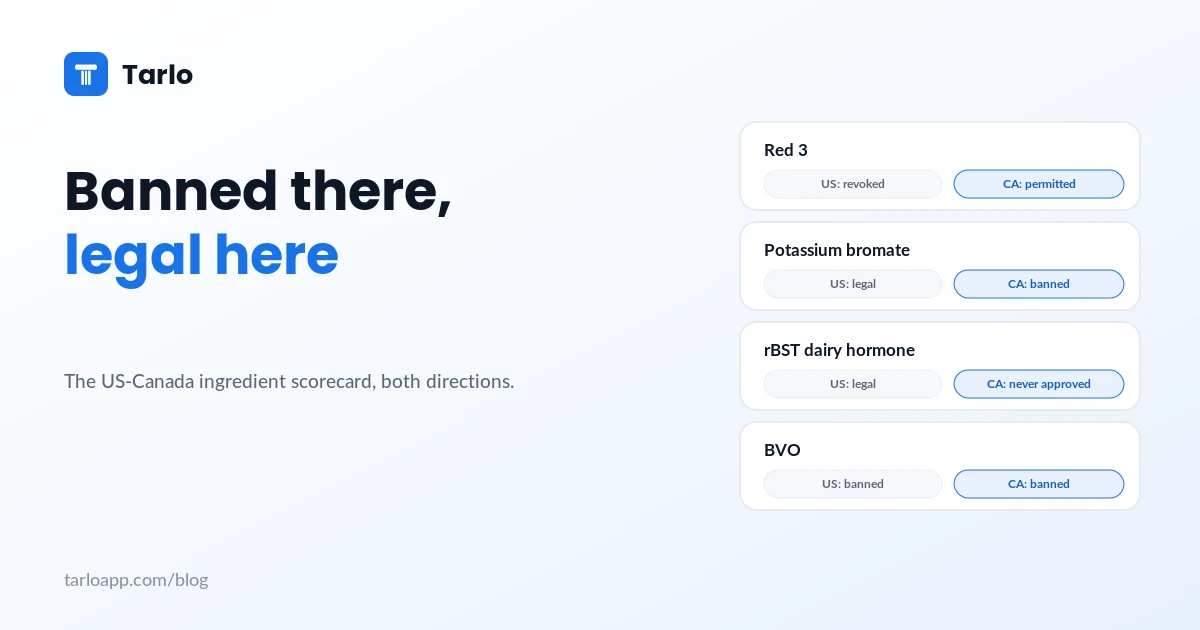
The concern is bioaccumulation: bromine from BVO builds up in fatty tissue, and studies link high intakes to thyroid effects and organ changes in animals — with human case reports (from extreme soda consumption) of bromism. The EU, UK, Japan and others had prohibited it years earlier; most major brands quietly reformulated away from BVO in the mid-2010s under consumer pressure, which is why the formal bans landed with little shelf disruption. This is what a genuine ban looks like, versus the voluntary dye phase-out or Red 3’s US-only revocation — worth keeping distinct.
What replaced it
The same emulsifying job is now done by sucrose acetate isobutyrate (SAIB) and glycerol ester of wood rosin (ester gum) — both permitted in Canada, both on ingredient lists of citrus drinks. Whether those fit your rules is, as ever, your call; they’re additives doing a cosmetic-stability job, the kind of thing an ultra-processing lens weighs even when regulators are satisfied.
The fine print
Two practical notes. Old stock: the transition ended in August 2025, but long-dated inventory and imports can linger; if you’re strict, the ingredient list (or a scan) settles any bottle in hand. Import gaps: products from markets that never banned BVO occasionally reach specialty shelves — labelled to Canadian rules, they shouldn’t contain it, but the check costs one scan.
Frequently asked questions
Was BVO in Mountain Dew and Gatorade?
Historically, some citrus formulations in North America used it; the major brands reformulated years before the bans. Current Canadian formulations don’t contain it — and any specific bottle’s list is one scan away. (We don’t track brand recipes from memory — they change.)
Is bromine the same as bromate?
Different additives, same element family: potassium bromate is a flour treatment — long banned in Canada, still federally legal in the US. BVO was the drink emulsifier. Canada prohibits both today.
Why did this ban succeed when dye bans stall?
Narrow use, available substitutes, and industry had already moved — banning an additive nobody defends is easy. The dyes are contested precisely because they’re everywhere and cheap.
Does Tarlo flag BVO?
The ingredient text match catches it if it appears (old stock, imports). Post-ban it’s mostly a historical entry — which is the good outcome.
Sources
- Health Canada — revocation of BVO’s food-additive authorization (transition to August 30, 2025): canada.ca
- US FDA — revocation of BVO authorization (2024).
- Food Safety Magazine — Canada bans BVO as a food additive.
Tarlo reflects the rules you turn on and is for general information only — it is not medical or dietary advice. Regulatory details are Canadian and current as of the date above; always verify the product's physical label.