The Best App to Avoid Seed Oils in Canada (2026)
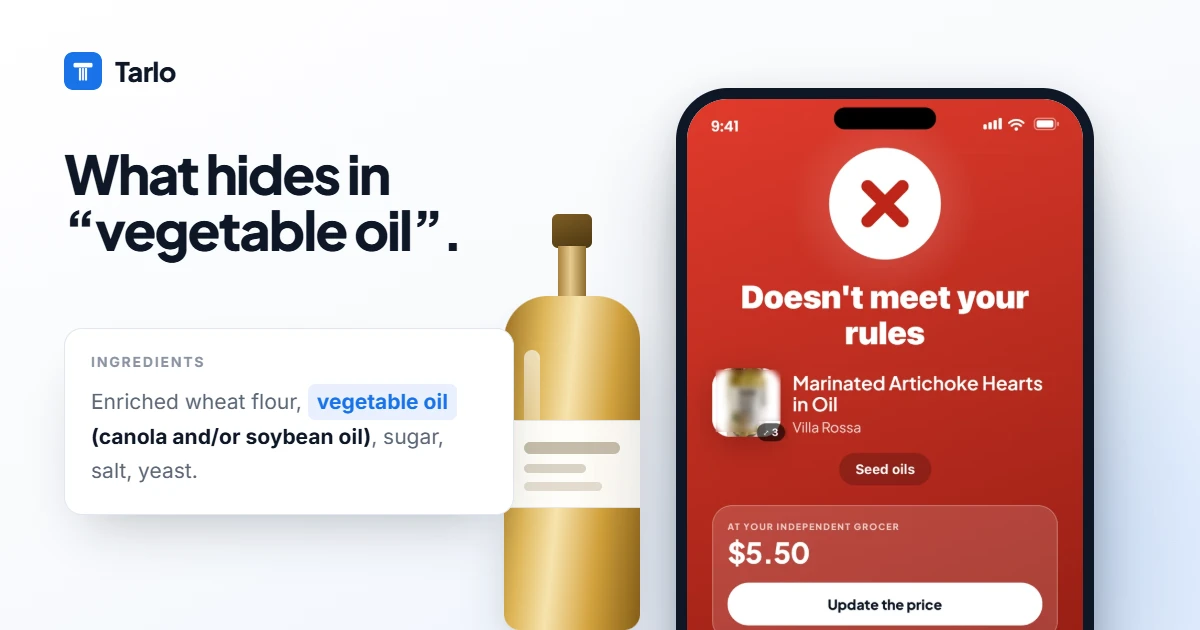
Avoiding seed oils by eye has a boss-level difficulty spike that dye avoidance doesn’t: the ingredient you’re avoiding frequently isn’t named. Canadian labels can legally say “vegetable oil” — or the maddening “canola and/or soybean oil” — and the actual oil can vary batch to batch. An app that only matches “canola” against the text will pass half the products that break your rule. Here’s what the job really requires, and how the current apps handle it.
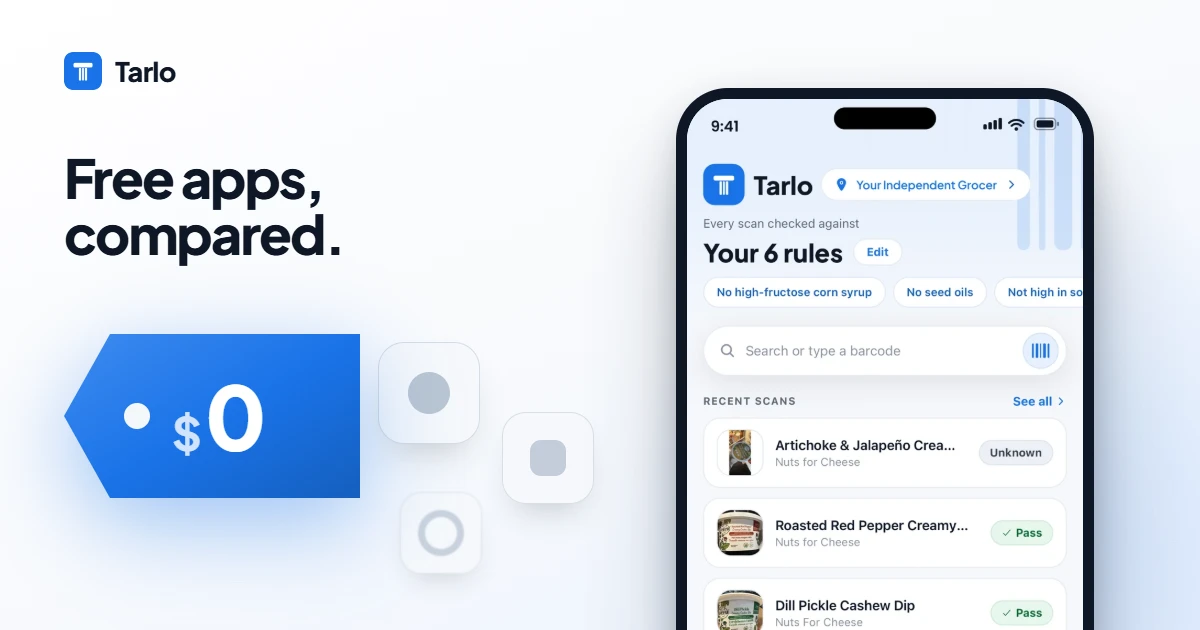
Cards on the table: Tarlo’s seed-oils rule was designed around exactly these phrasings, in both label languages, free. Checklist below — hold us to it.
Why seed oils are the hardest avoidance
Three compounding problems, detailed in our seed oils on Canadian labels guide: the generic “vegetable oil” declaration (legal, common, uninformative), the “and/or” blend (contents can change between production runs under one label), and ubiquity — canola, soybean and sunflower are in a huge share of everything with added fat, so the rule fires constantly and false negatives are easy. Add French phrasings (huile végétale, huile de canola) and you’re matching a dozen-plus strings across two languages — per product.
What the job requires
- The full family, by name: canola, soybean, sunflower, safflower, corn, cottonseed, grapeseed, rice bran — EN and FR.
- The generic phrasings: “vegetable oil” and its and/or variants must count as seed oils — because in Canadian packaged goods, they almost always are.
- A rule, not a score: seed oils barely dent a nutrition-weighted score — canola’s numbers are good by mainstream metrics. Score apps structurally can’t serve this preference.
- Swaps with prices: seed-oil-free products carry a real premium; you want the alternative and its cost in one view.
How the apps compare
| Seed-oil rule | Catches “vegetable oil” | CA/FR names | Swaps + prices | Free | |
|---|---|---|---|---|---|
| Tarlo | Yes — preset | Yes, incl. and/or | Yes | Yes | Yes |
| Yuka | No — oils score well | n/a | Partial | No prices | Free tier |
| Bobby Approved | Partial (his list) | Unclear on generics | US names | Limited | Paid |
| Trash Panda / Osana | Ingredient explanations | Varies | US-leaning | No prices | Varies |
| Open Food Facts | Raw ingredient view | You read it yourself | Data-level | No | Free |
The Yuka row deserves emphasis because it surprises people: this isn’t a Yuka flaw so much as a philosophical mismatch — mainstream nutrition scoring rewards low-saturated-fat oils, so a canola-heavy product can score nicely. If seed oils are your rule, a score built on the opposite premise can’t be your tool.
The and/or problem — and honest limits
How Tarlo handles the ambiguity: “vegetable oil” and and/or blends fail the seed-oils rule — treat-as-present is the only honest reading when the label reserves the right to use them. The flip-side limit, stated plainly: no app can tell you which oil is in the specific bag you’re holding when the label says and/or — the information doesn’t exist at the barcode level. What an app can do is what Tarlo does: flag the uncertainty as a fail, name the phrasing that triggered it, and surface products that name a specific oil you accept — olive, avocado, coconut, butter.
Swaps and the price premium
Seed-oil-free is the rule where the swap’s price matters most: avocado-oil chips routinely cost half again as much as the canola version. Tarlo’s fail screen shows same-category alternatives that pass the rule with shopper-reported prices, so the premium is a number, not a surprise — and sometimes the store brand’s olive-oil line makes it small. The category-by-category picture is in chips without seed oils.
Setting it up
- Install Tarlo (free).
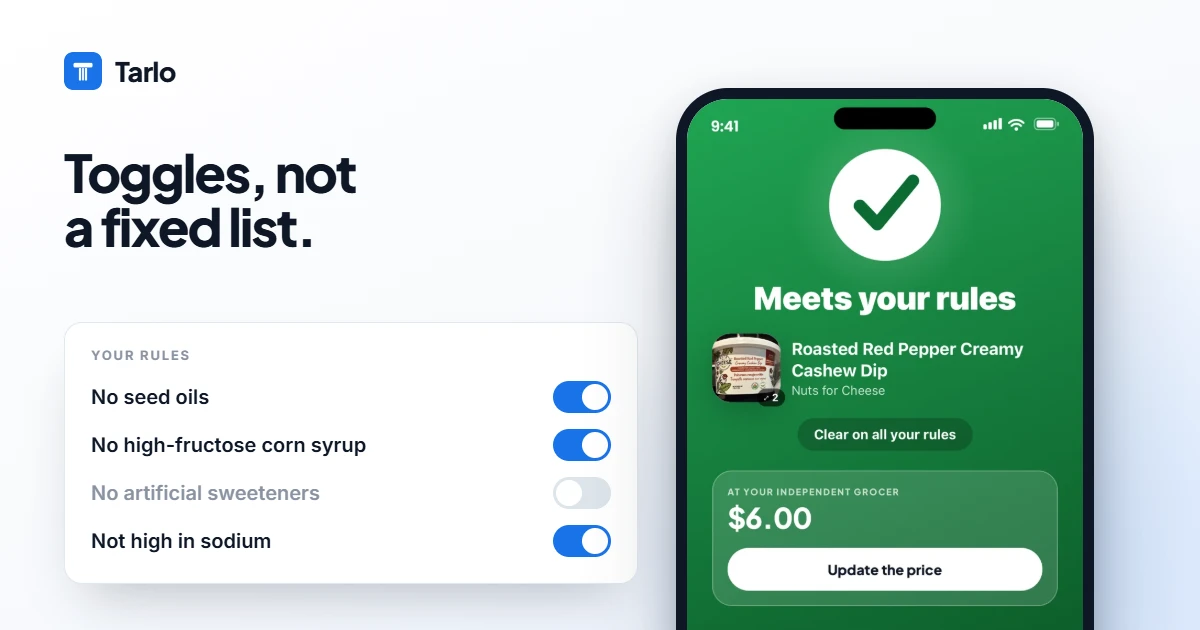
- Toggle on seed oils (it’s a preset, off by default — dyes and glucose-fructose are the starters).
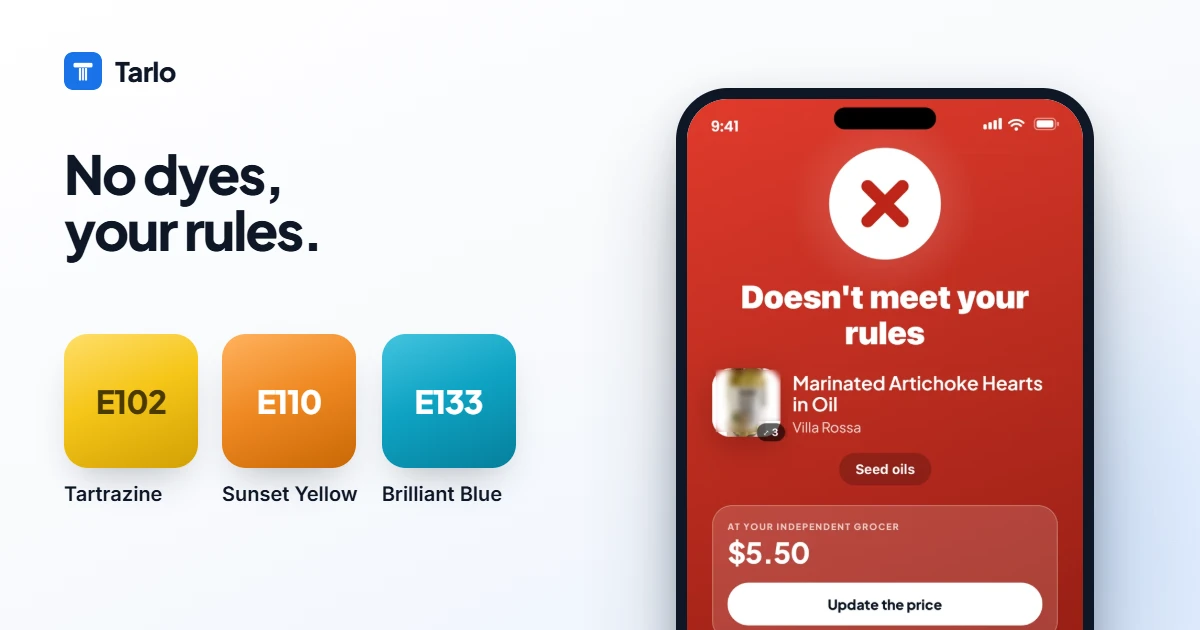
- Scan the snack aisle. Fails name the trigger — “vegetable oil (canola and/or soybean)” — and list passing alternatives with prices.
Frequently asked questions
Does the rule flag olive and avocado oil?
No — they’re fruit oils, outside the seed-oil family, and the movement generally accepts them. Blends (“olive oil blend”) get caught when they include a seed oil — the list tells the truth the front doesn’t.
Palm oil?
Technically a fruit oil; some avoiders include it anyway (for other reasons). Tarlo’s preset focuses on the seed family; palm can be added as a custom term if it’s on your list.
Is there any app that identifies the actual oil in an and/or blend?
No — that information isn’t on the label or in any database; it varies by production run. Anyone claiming otherwise is guessing.
Restaurant fryers?
Outside barcode-land. If it matters, ask — in Canada the default fryer oil is canola.
Sources
- Canadian Food Inspection Agency — declaration of fats and oils: inspection.canada.ca
- Public app listings for compared apps, reviewed August 2026.
Tarlo reflects the rules you turn on and is for general information only — it is not medical or dietary advice. Regulatory details are Canadian and current as of the date above; always verify the product's physical label.