Chips Without Seed Oils: The Canadian Snack Aisle Guide
Chips are the hardest test of a seed-oils rule: frying oil is the second ingredient in the bag, and in Canada that oil is overwhelmingly canola or a “vegetable oil (and/or)” blend. But the seed-oil-free snack shelf has grown fast, and the real questions now are what exists here, what it costs, and how to find it without reading forty bags. Answers below.
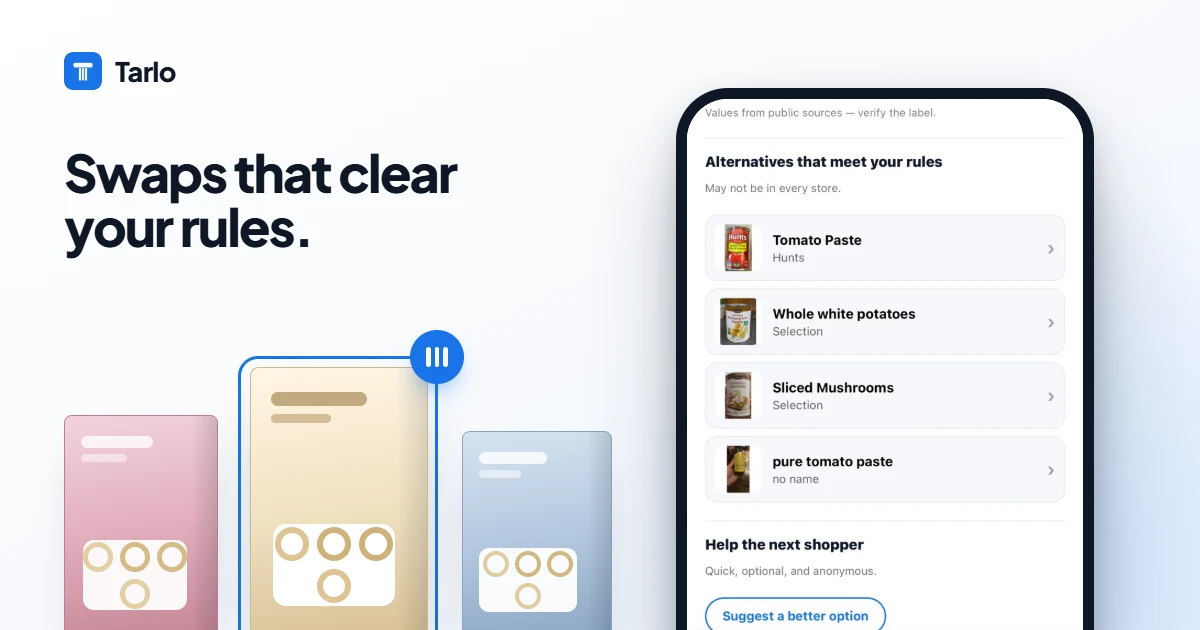
The forty-bag shortcut: Tarlo’s seed-oils rule — scan, fail names the oil phrase, alternatives show with prices.
What’s actually in the bag
A standard chip label reads: potatoes, vegetable oil (canola and/or sunflower and/or soybean), salt, seasoning. The and/or blend is the industry norm — oil choice follows commodity prices batch to batch, which is why no app or human can tell you which oil is in a specific bag; the label reserves the right to all of them. Under a seed-oils rule, and/or phrasing fails — treat-as-present is the only honest reading.
Kettle, ridged, tortilla, popcorn, cheese puffs: same story, different shapes. The seasonings add their own passengers (tartrazine and Sunset Yellow in some cheese and nacho dusts, maltodextrin almost universally).
The oils that pass
The seed-oil-free snack world runs on four fats: avocado oil (the flagship — high smoke point, neutral taste, the biggest premium), olive oil (more flavour, common in imported and store-brand lines), coconut oil (some kettle brands; distinct taste, high saturated fat — which flips the mainstream framing), and beef tallow / lard (the traditionalist revival, small but growing). Each passes a seed-oils rule; each makes its own trade — coconut and tallow versions can carry the saturated-fat FOP consideration instead. One rule rarely tells the whole story; that’s a feature of rules-based scanning, not a bug.
The Canadian snack-shelf map
What you’ll realistically find: avocado-oil chip brands in the natural-foods aisle of major chains and health stores (widely distributed now, not specialty-only); olive-oil potato chips in several store-brand premium lines — often the cheapest passing option in the store; coconut/tallow lines mostly in health-food stores and online; and popcorn — the sleeper category, where several brands pop in coconut or olive oil at near-normal prices, plus plain kernels for home popping in whatever fat you accept (the cheapest pass in the entire aisle).
The price premium, quantified
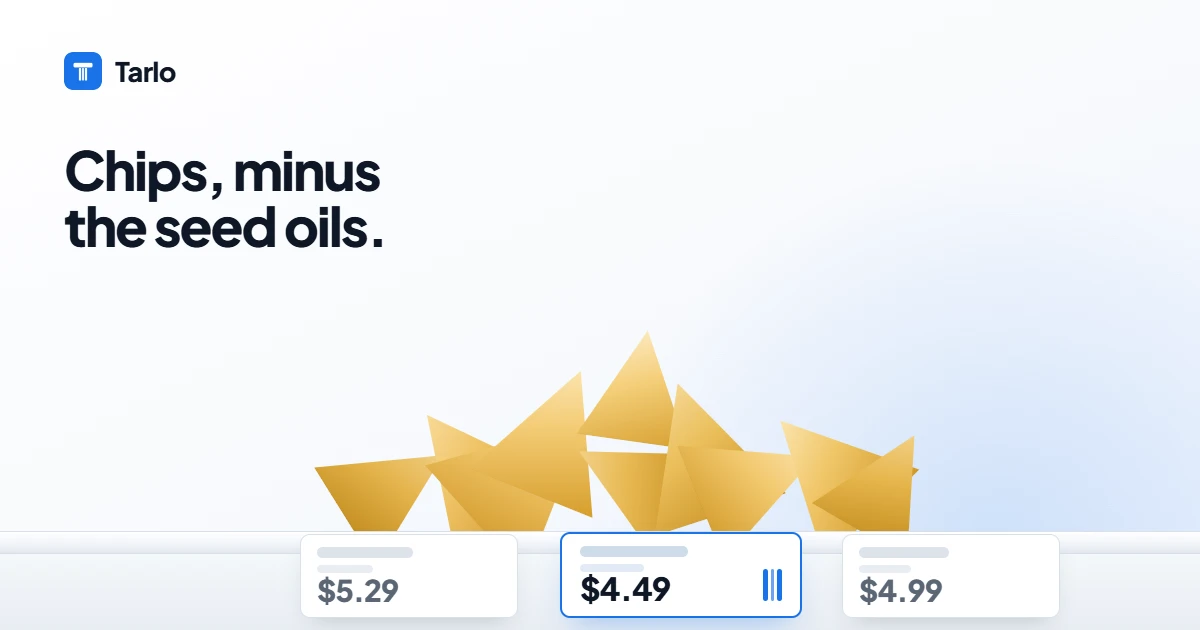
The honest numbers, in rough Canadian terms: conventional chips set the floor; olive-oil store-brand versions run maybe a third more; avocado-oil brands often half again to double the conventional price per bag. This is the rule with the steepest wallet cost — which is exactly why shopper-reported prices in Tarlo matter here: the premium varies wildly by store and promotion, and the cheapest passing bag at your store this week is a fact, not a vibe. Home-popped popcorn resets the equation entirely.
The honest caveats
A seed-oil-free chip is still a chip: salt (many carry the sodium symbol), refined starch, and engineered snackability don’t leave the bag with the canola. If your deeper goal is less ultra-processed food, the oil swap is one marker of several. And “cooked in avocado oil” front-of-bag claims deserve a flip-over: some blends lead with avocado and finish with sunflower — the ingredient list, as always, outranks the marketing.
The aisle routine
- Toggle seed oils on in Tarlo (plus sodium if you run it) — why this is the app job seed oils actually need.
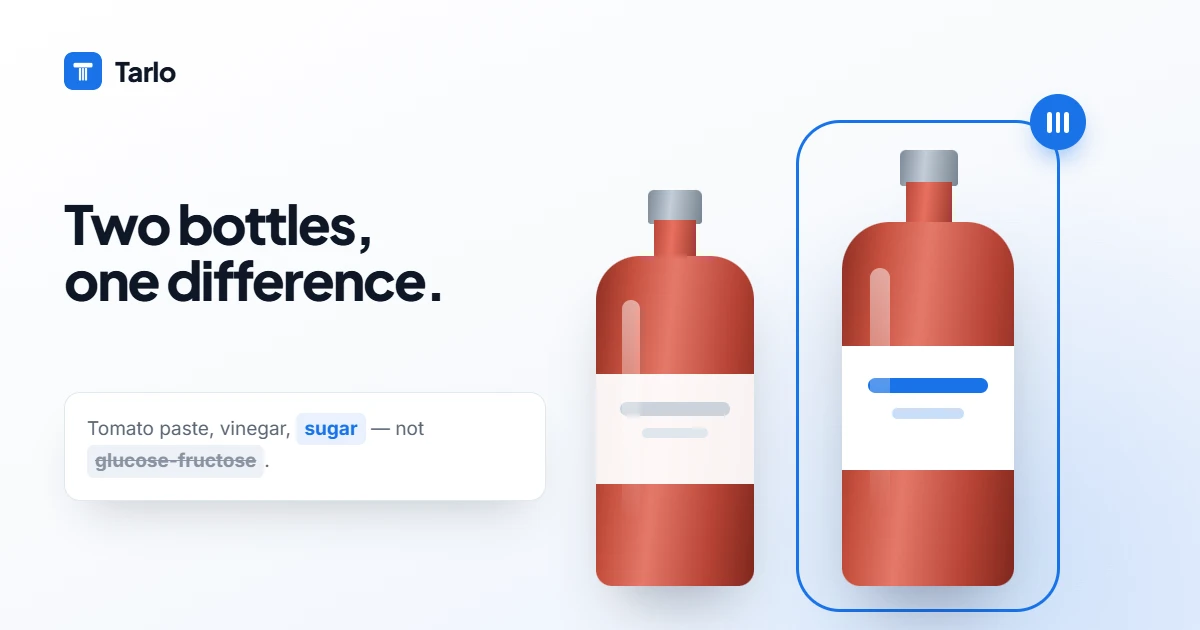
- Scan your usual bag — the fail names the exact phrasing (“vegetable oil (canola and/or…)”).
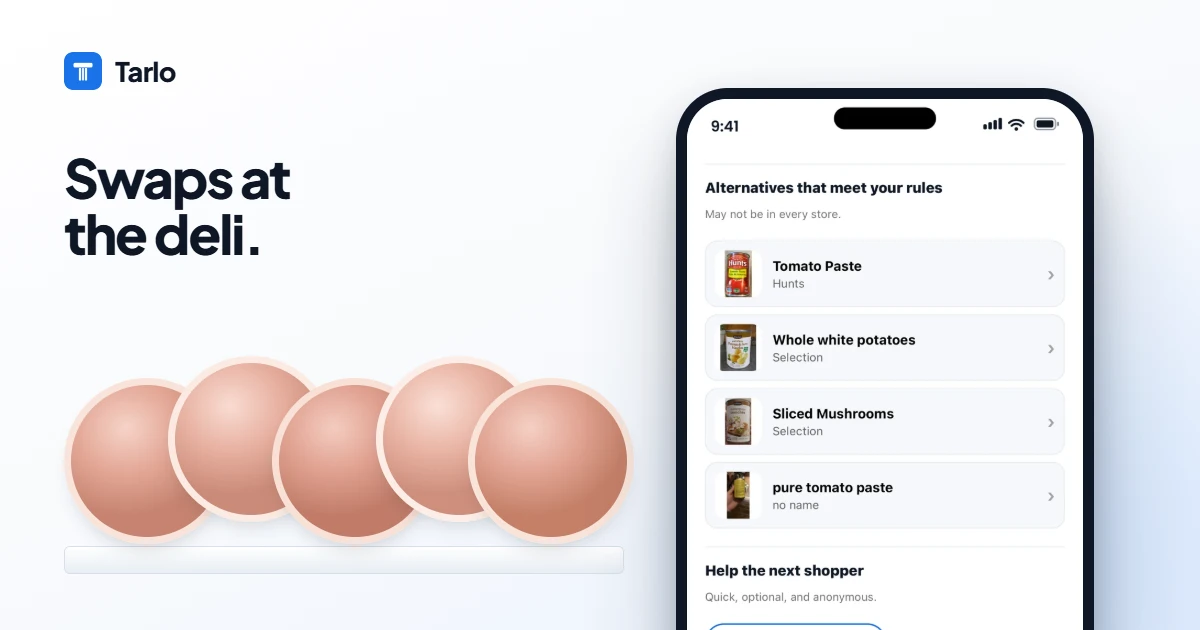
- Check the passing alternatives with prices; the store-brand olive-oil line is the frequent value pick.
- Scan the “avocado oil” claimant before trusting it — blends exist.
Frequently asked questions
Are avocado-oil chips healthier?
Not a claim we make — they’re chips that meet a different rule. Fat profile changes; salt, starch and calories broadly don’t. “Meets your rules” is the honest frame.
Why are they so expensive?
Input cost: avocado oil runs several times canola’s price per litre, and fryers use a lot of oil. The premium is real economics, not pure markup.
Is sunflower oil okay? Some “clean” brands use it.
Sunflower is a seed oil — it fails the standard rule, including high-oleic versions (bred for stability, still seed-derived). Some avoiders accept high-oleic specifically; that’s a custom-rule decision.
Best cheap option that passes?
Plain popcorn kernels, home-popped in your accepted fat, seasoned yourself. Passes everything, costs least, and the dye and maltodextrin questions vanish with the seasoning packet.
Sources
- Canadian Food Inspection Agency — fats and oils declaration: inspection.canada.ca
- Health Canada — front-of-package thresholds: canada.ca
Tarlo reflects the rules you turn on and is for general information only — it is not medical or dietary advice. Regulatory details are Canadian and current as of the date above; always verify the product's physical label.