Ketchup Without Glucose-Fructose (HFCS) in Canada
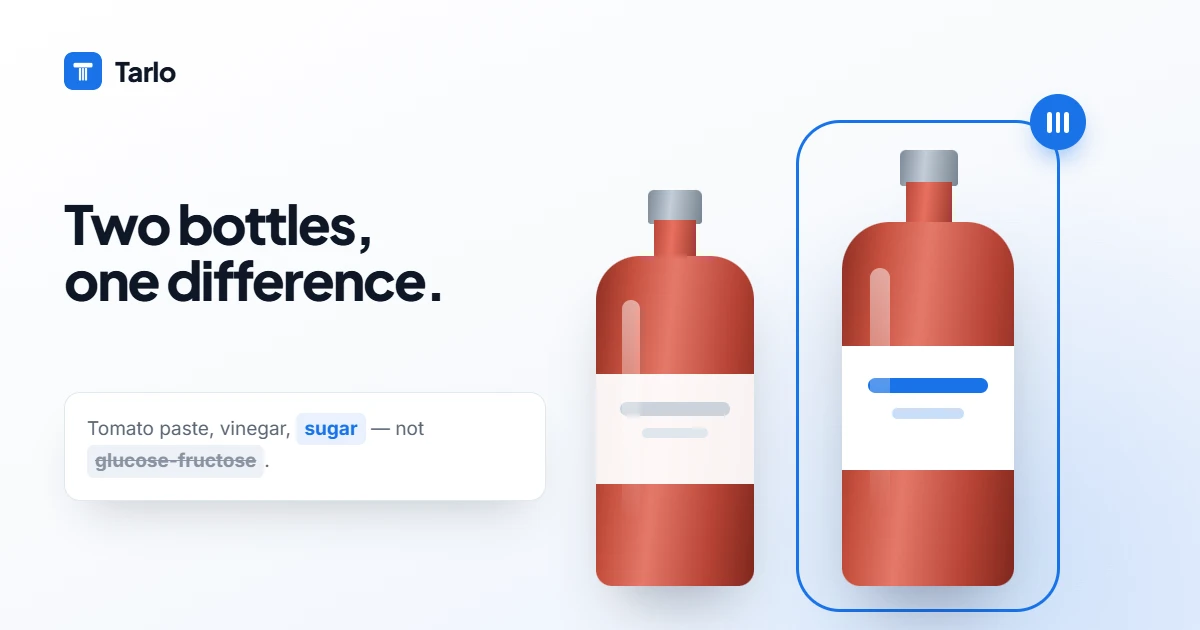
Ketchup is the classic first scan for shoppers avoiding high-fructose corn syrup — and the classic first surprise, because on Canadian labels the ingredient is called glucose-fructose, so people looking for “HFCS” think their bottle is clean. Here’s what’s actually in the ketchup aisle, what the alternatives use instead, and the fastest way to leave with a bottle that meets your rule.
That fastest way, in one line: Tarlo’s HFCS rule is on by default — scan the bottle, get the verdict, see the passing options with prices.
What’s in standard ketchup
A conventional Canadian ketchup ingredient list runs: tomato paste, liquid sugar and/or glucose-fructose, vinegar, salt, seasonings. Sugar is doing real work — balancing tomato acidity and preserving — and glucose-fructose is simply the cheapest way to supply it. Typical ketchup carries about 4 g of sugars per tablespoon; because ketchup’s reference amount is small, some bottles trip Canada’s 10% “high in sugars” small-serving threshold, though many sit just under.
Note the “and/or” — like seed-oil blends, some labels reserve the right to switch sweeteners between runs. If your rule is no glucose-fructose specifically, and/or phrasing means scan-and-check is more reliable than brand memory.
Your options on the Canadian shelf
Four real categories exist in most Canadian groceries:
- Sugar-sweetened (no glucose-fructose). Several mainstream and organic lines sweeten with cane sugar or liquid sugar only. Meets a glucose-fructose rule; sugar content is similar — this is an ingredient-philosophy swap, not a sugar-reduction one.
- No-sugar-added, sweetener-based. Sweetened with sucralose or stevia. Passes the HFCS rule and the sugars threshold — but fails an artificial-sweeteners rule if you run one. Check which trade you’re making.
- No-sugar-added, unsweetened. Just tomatoes, vinegar, salt, spice — tarter, thinner, closest to homemade. Passes everything except a taste-for-classic-ketchup test.
- Store-brand versions of all three — Canadian house brands increasingly mirror each tier, usually cheaper.
Reading the swap honestly
The claim-safe framing we always use: none of these is “healthier” by decree — they’re different answers to different rules. Swapping glucose-fructose for cane sugar changes the ingredient, not the grams. Swapping to sucralose changes the grams, not the sweetness dependence. The unsweetened bottle changes both and asks your palate to adjust. Your rules decide — the label (or the scan) just tells the truth about each bottle.
The price picture
Rough Canadian landscape: conventional big-brand ketchup is the price floor; sugar-only versions run modestly higher; organic and unsweetened lines carry the biggest premium; store brands undercut each tier. Shopper-reported prices in Tarlo put numbers on that spread at your store before you reach for the shelf — and ketchup prices swing with promotions more than most staples, so fresh beats remembered.
The two-minute aisle routine
- Scan your usual bottle — if it lists glucose-fructose, the HFCS rule fails and names it.
- Check the alternatives Tarlo lists from the same category, with prices.
- Scanning the candidates takes seconds each — watch for the sweetener swap (category 2) if you also run the sweeteners rule.
- Prefer it sweeter-but-sugar? Category 1 passes the default rules. Cutting sugars overall? The sugars threshold rule sorts 1 from 3 instantly.
Frequently asked questions
Is Canadian Heinz made with HFCS?
Formulations differ by market and change over time — which is exactly why we won’t answer from memory. Scan the bottle in your hand; the ingredient list on today’s label is the only reliable answer.
Is “no sugar added” ketchup unsweetened?
Not necessarily — many use sucralose or stevia. “Unsweetened” and “no sugar added” are different claims; the ingredient list settles it.
Does homemade solve it?
Completely — tomato paste, vinegar, spices, and whatever sweetener you accept. It’s the one option where you set every ingredient; it just loses on convenience and fridge life.
What about BBQ sauce and other condiments?
Same story, bigger numbers — BBQ sauces run far higher in sugars and glucose-fructose is common. The same scan-and-swap routine applies across the condiment aisle — and the lunchbox thread continues in nitrite-free deli meat.
Sources
- Canadian Food Inspection Agency — sweetener declaration and and/or labelling: inspection.canada.ca
- Health Canada — front-of-package sugars thresholds: canada.ca
Tarlo reflects the rules you turn on and is for general information only — it is not medical or dietary advice. Regulatory details are Canadian and current as of the date above; always verify the product's physical label.