Is Sucralose (Splenda) Bad for You? A Label Guide
Sucralose — best known by the brand name Splenda — is one of the two sweeteners you’ll meet most often in “zero sugar” products in Canada, alongside aspartame. It’s roughly 600 times sweeter than sugar, survives heat (which aspartame doesn’t), and shows up in far more products than most shoppers realize. Here’s what it is, what the science and regulators actually say, and how to keep it out of your cart if that’s your rule.
Short on time? Tarlo’s artificial-sweeteners rule flags sucralose and its siblings on any scan, in both label languages — free.
What sucralose is
Sucralose is a chlorinated derivative of sugar — chemists start with sucrose and replace three of its hydroxyl groups with chlorine atoms. The result tastes intensely sweet but passes through the body largely unabsorbed, contributing essentially no calories. It was approved in Canada in 1991 (one of the first countries to do so) and appears on labels as “sucralose” in both English and French; internationally it’s E955.
Two properties explain its market share: it’s heat-stable (usable in baking, where aspartame breaks down) and it has a cleaner sugar-like taste profile than older sweeteners like saccharin. That’s why “no sugar added” baked goods, syrups and protein products lean on sucralose specifically.
Where it shows up
The predictable places: zero-sugar soft drinks and flavoured waters, sugar-free gum and candy, “light” yogurts and puddings, protein powders and bars, sugar-free syrups and jams, and tabletop packets (Splenda). The less predictable places — where shoppers get caught — include some regular-sugar products that add a little sucralose to boost sweetness cheaply, “reduced sugar” versions of cereals and granola bars, flavoured coffees, electrolyte drinks, and children’s medicine syrups.
The label trap is the same one we describe for aspartame: “zero sugar” is not “unsweetened.” A drink with no sugars line and no front-of-package sugar symbol can still be intensely sweetened — with sucralose doing the work.
What regulators say
- Health Canada permits sucralose with an acceptable daily intake (ADI) of about 9 mg per kg of body weight per day — for a 70 kg adult, that’s the sweetness equivalent of a very large daily volume of diet drinks before reaching the limit.
- JECFA (the WHO/FAO additive committee) sets an ADI of 15 mg/kg, and the US FDA 5 mg/kg — different safety margins on the same evidence, all far above typical intakes.
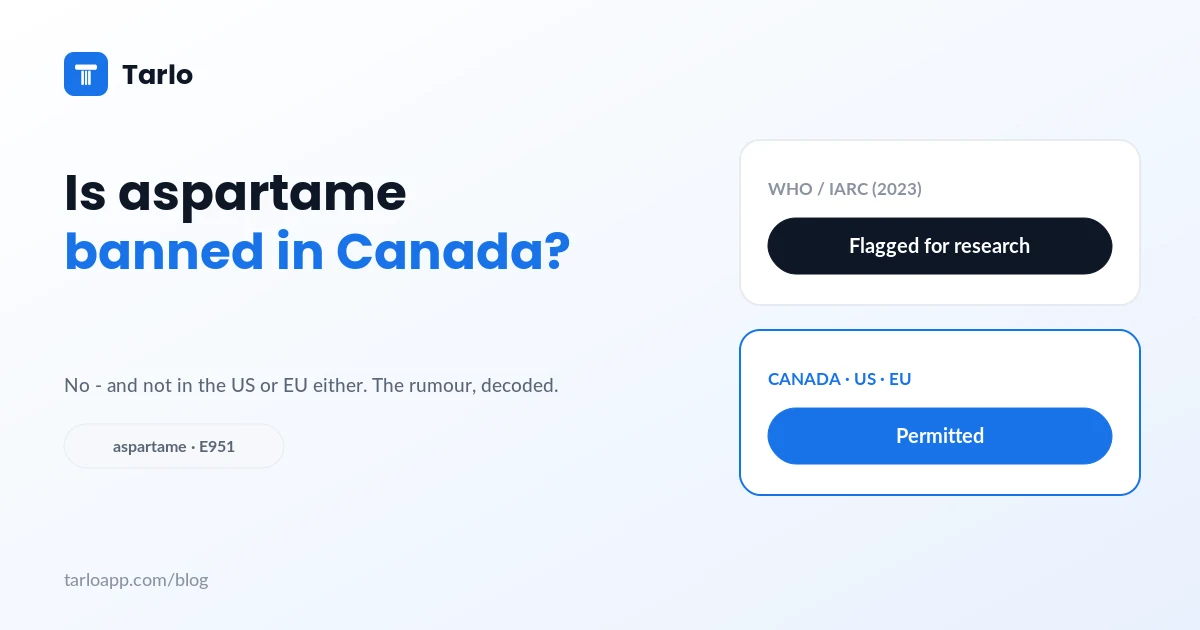
- In 2023, the WHO issued separate guidance suggesting non-sugar sweeteners in general shouldn’t be relied on for long-term weight control — a statement about usefulness, not toxicity, but it moved a lot of headlines.
No major regulator restricts sucralose the way the EU restricted titanium dioxide; it remains broadly permitted worldwide.
What the research debate is about
Three active threads, fairly stated:
The gut microbiome. Some studies (mostly in animals, some small human trials) suggest sucralose may alter gut bacteria populations. Other trials find no meaningful effect at realistic doses. The evidence is genuinely mixed, and regulators haven’t found it strong enough to act on.
Heating. At very high temperatures sucralose can begin to break down, and some researchers have raised questions about the byproducts. Regulators consider normal home baking within approved uses; some cautious consumers avoid baking with it anyway.
Sweetness adaptation. A behavioural argument rather than a toxicity one: regularly consuming intensely sweet products may keep sweet preferences high. It applies to every intense sweetener, natural or artificial.
The fair summary: sucralose is among the most-studied additives in the food supply, regulators worldwide consider it acceptable at real intakes, and the open questions are real but unresolved. Avoiding it is a legitimate preference — not a scientific obligation — which is exactly how Tarlo treats it: your rule, applied consistently, no fear-mongering either way.
Sucralose vs aspartame vs stevia
| Sucralose | Aspartame | Steviol glycosides | |
|---|---|---|---|
| Label name | sucralose | aspartame | stevia extract / steviol glycosides |
| Code | E955 | E951 | E960 |
| Origin | Modified sugar | Two amino acids | Stevia plant extract |
| Heat-stable | Yes | No | Yes |
| Typical uses | Baking, drinks, protein | Drinks, gum, yogurt | Drinks, “naturally sweetened” products |
| Special notes | — | Phenylalanine warning (PKU) | Aftertaste; often blended with erythritol |
Products reformulate between these freely — a drink that drops aspartame after bad press often picks up sucralose or a stevia blend. If your rule is “no artificial sweeteners,” you want all of them watched at once, not one name memorized.
How to avoid it automatically
In Tarlo, switch on the artificial sweeteners rule once. Every scan checks the product’s pre-parsed additive codes and its ingredient text — English and French — for sucralose, aspartame, acesulfame potassium, saccharin and neotame together, and answers meets / doesn’t meet your rules with the exact trigger named. When something fails, Tarlo shows alternatives on the same shelf with shopper-reported prices.
Frequently asked questions
Is sucralose natural?
No — it’s synthesized from sugar but doesn’t occur in nature. Products calling themselves “naturally sweetened” typically use stevia or monk fruit instead.
Does sucralose spike blood sugar?
For most people, sucralose itself has little to no direct effect on blood glucose, which is why it’s common in diabetic-friendly products. Some research explores indirect effects via gut bacteria; anyone managing diabetes should follow their clinician’s guidance rather than a blog — ours or anyone else’s.
Why do some “sugar” products contain sucralose too?
Cost. A small dose of sucralose lets a manufacturer cut some sugar without losing sweetness. It must still appear in the ingredient list — which is why scanning catches what the front of the package doesn’t advertise.
Is Splenda the same as sucralose?
Splenda is a brand; its classic packets are sucralose bulked with maltodextrin and dextrose (which add trace carbs). On ingredient lists you’ll see “sucralose” regardless of brand.
Sources
Tarlo reflects the rules you turn on and is for general information only — it is not medical or dietary advice. Regulatory details are Canadian and current as of the date above; always verify the product's physical label.