Yogurt Without Artificial Sweeteners: A Canada Guide
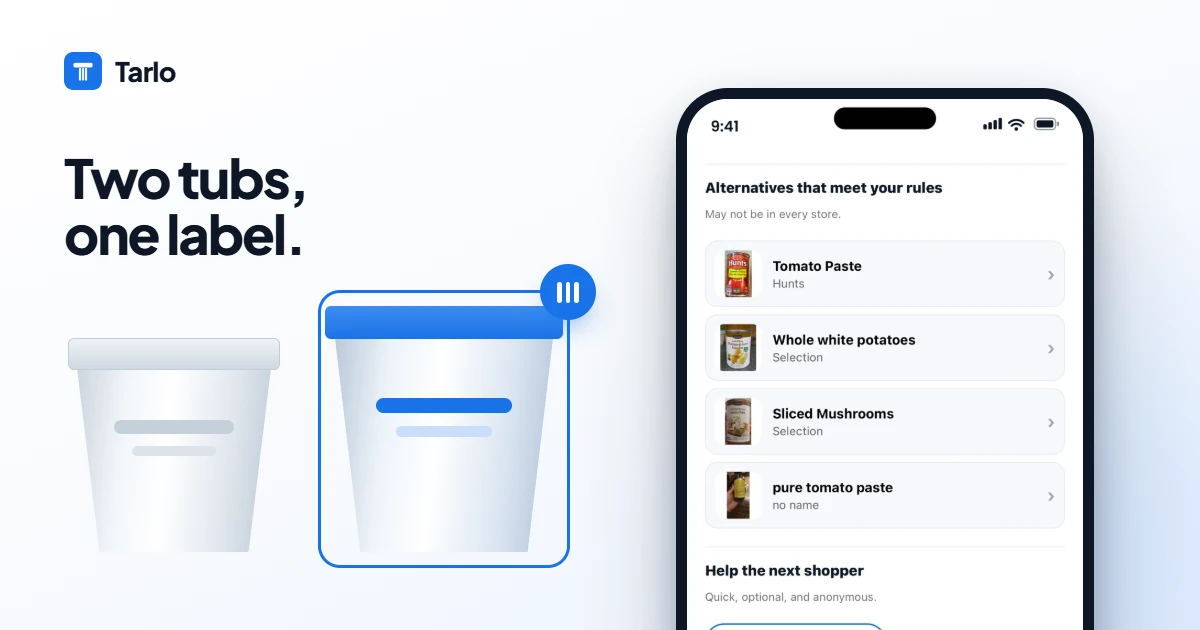
The yogurt aisle runs a quiet bait-and-switch: “light,” “0%,” “no sugar added” and “diet” all usually mean the sugar was swapped for sucralose, aspartame or acesulfame potassium — often two at once. If your rule is no artificial sweeteners, this shelf needs a decoder. Here it is, including the sugar trade-off that makes this swap genuinely two-sided.
Decoder in one tap: Tarlo’s artificial-sweeteners rule catches the whole family on any cup, both languages.
The yogurt sweetener map
Canadian yogurt splits into four sweetening camps: sugar-sweetened (regular flavoured cups and tubes — sugar or glucose-fructose, frequently enough to trip the sugars threshold); artificially sweetened (“light”/“diet” lines — typically sucralose + Ace-K in tandem, the classic blend); stevia-sweetened (the newer “naturally light” positioning — passes an artificial-sweeteners rule, still intensely sweetened); and unsweetened (plain yogurt and skyr — the only camp with nothing to decode). Kids’ formats (tubes, drinkables) sit disproportionately in camps one and two — worth knowing if the dye question brought you to this aisle, since coloured kids’ yogurts can carry both concerns at once.
The marketing words, decoded
| Front of cup says | Usually means |
|---|---|
| Light / Léger | Artificial sweeteners replacing some/all sugar |
| 0% + flavoured | Fat-free; sweetener status unknown — check |
| No sugar added | Sweetened another way (artificial or stevia) |
| Reduced sugar | Part sugar, part sweetener — commonly Ace-K |
| Naturally sweetened | Stevia/monk fruit, or just… sugar (it’s natural!) |
| Plain / Nature | The honest one — nothing added |
None of these phrases is regulated to mean “no artificial sweeteners,” which is why the phrase you’re looking for doesn’t exist on the front. The ingredient list — or the scan — is the arbiter.
What passes the rule
The reliable passes: plain yogurt, plain Greek, plain skyr (add your own fruit/honey — you control the grams and the sugar names); regular sugar-sweetened flavoured yogurt (passes the sweetener rule while possibly failing the sugars threshold — see the trade-off below); stevia lines if your rule targets artificial specifically; and a small set of fruit-only (“just fruit, no added anything”) premium cups. Store brands mirror all four camps at friendlier prices — visible via shopper-reported prices before you commit.
The sugar trade-off, honestly
This aisle forces the cleanest example of rules being yours: the sweetener-free flavoured cup carries real sugar — often 10–15 g per serving, sometimes FOP-symbol territory — while the “light” cup passes the sugar test by failing the sweetener one. There is no cup that maxes both rules except plain. Which trade you prefer is a legitimate personal call: some shoppers run only the sweetener rule, some only sugars, some both and accept that flavoured yogurt mostly fails. Tarlo shows both verdicts at once with the measured %DV, so the trade is explicit instead of hidden behind “light.”
The aisle routine
- Toggle artificial sweeteners (and high in sugars, if you run it) in Tarlo.
- Scan the current cup: fails name the exact sweetener (“sucralose, acesulfame-potassium”) or the sugars %DV.
- Compare the passing alternatives with prices — plain + your own fruit is perennially the cheapest full pass.
- Kids’ tubes: scan for dyes too; the coloured ones occasionally stack colours on top of sweeteners.
Frequently asked questions
Is stevia an artificial sweetener?
It’s plant-derived, so it passes an “artificial” rule — but it’s still an intense sweetener at industrial purity. If your concern is sweetness dependence rather than synthesis, treat it as in-scope via a custom rule.
Why do light yogurts use two sweeteners?
Blending (the Ace-K story) — pairs mask each other’s aftertaste and cut the dose of each. It’s also why watching one famous name misses half the shelf.
Is plain yogurt’s sugar a problem?
Plain yogurt’s ~4–6 g per serving is naturally occurring lactose — exempt territory, not added sugar. The Sugars line doesn’t distinguish; the ingredient list (no sweeteners listed) does.
Best kid-friendly pass?
Plain yogurt + mashed berries wins on every rule and cost; among packaged options, fruit-only cups pass cleanly at a premium. Scan the tube before trusting the cartoon.
Sources
- Health Canada — permitted sweeteners; sugars and the Nutrition Facts table: canada.ca
- Canadian Food Inspection Agency — nutrient content claims (“light”, “no sugar added”): inspection.canada.ca
Tarlo reflects the rules you turn on and is for general information only — it is not medical or dietary advice. Regulatory details are Canadian and current as of the date above; always verify the product's physical label.