New Food Label Rules in Canada (2026): What Changed
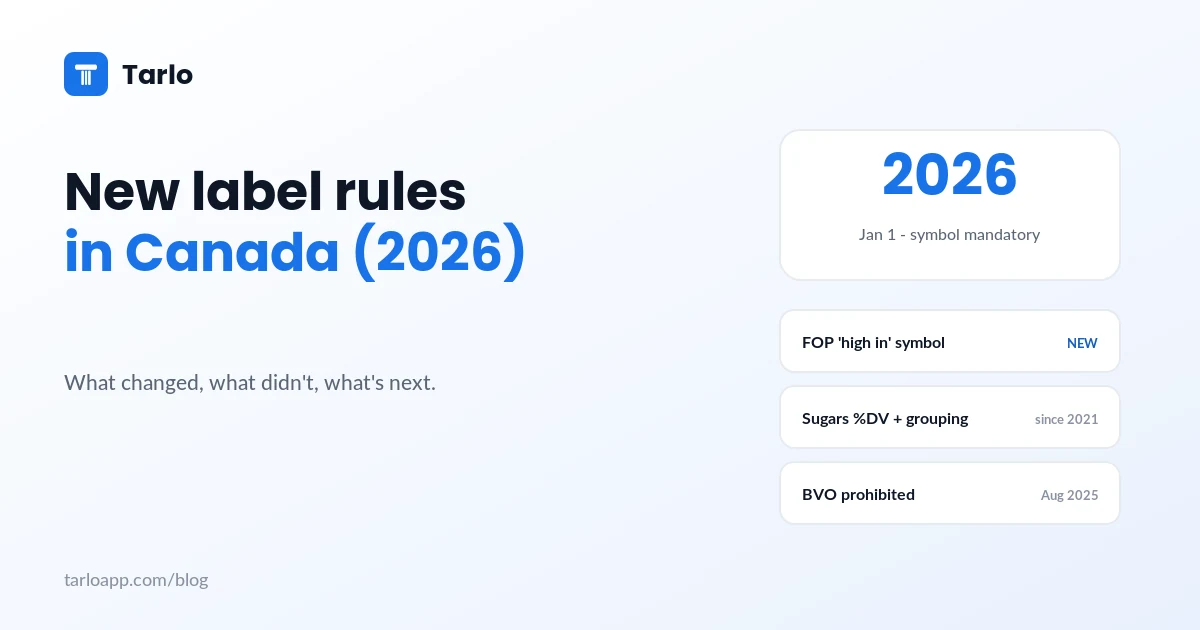
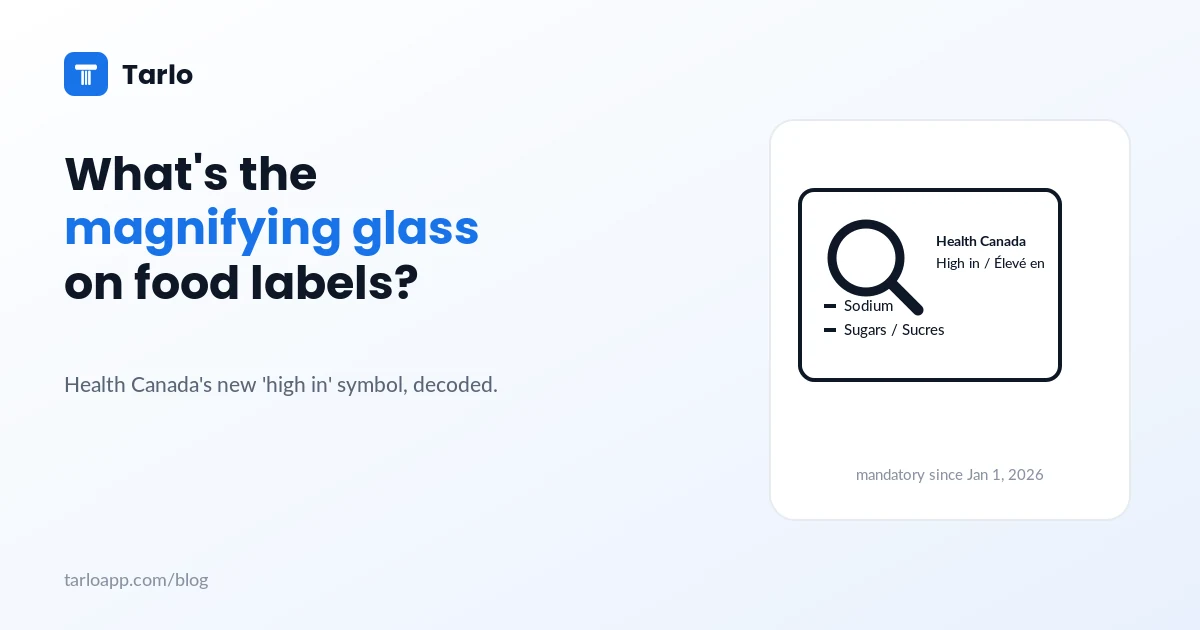
The headline change for 2026: the front-of-package “high in” symbol became mandatory on January 1. If Canadian groceries look different this year, that’s the reason — the black-and-white magnifying glass now flags any qualifying prepackaged food high in sodium, sugars or saturated fat. Here’s everything that changed, what was already in place, and what’s next.
Keeping up the easy way: Tarlo already applies the 2026 rules to every scan — plus your own ingredient rules — free.
Change 1: the “high in” symbol is mandatory
Finalized in July 2022 with a three-and-a-half-year transition, the front-of-package nutrition symbol hit its compliance deadline on January 1, 2026. Any qualifying prepackaged food at or above 15% DV of sodium, sugars or saturated fat per reference amount (10% small-serving; 30% main dishes) must now carry the bilingual magnifier. The full mechanics — thresholds, worked examples, exemptions, aisle patterns — live in our FOP deep dive; the quick “what is that symbol” answer is here.
Change 2: transition quirks on the shelf
2026 itself is messy in three predictable ways: old stock legally sells through (an unsymbolled package may simply predate the deadline — absence proves nothing this year), stickered imports appear as importers retrofit compliance, and CFIA enforcement ramps through the year. Practical takeaway: during the transition, the symbol’s presence is reliable information; its absence isn’t. A scan reads the underlying numbers either way.
What was already in place
Worth knowing what 2026 did not change, since coverage often blurs it. The Nutrition Facts modernization (sugars %DV, grouped sugar ingredients, standardized serving sizes, potassium/vitamin D) finished phasing in by 2021–2022 — the full table guide. Individual naming of food colours dates to 2016 (why “Allura Red” appears by name). Supplemented foods (caffeinated drinks, vitamin waters) got their caution identifier from 2022. And the BVO ban completed its transition in August 2025. 2026’s symbol is the capstone, not the whole building.
What manufacturers did in response
The pattern documented in every country with front-of-package warnings: reformulate under the line. Expect quiet recipe changes — sodium shaved, sugar cut to 14-point-something grams, and sometimes sugar swapped for sweeteners the symbol doesn’t track (a change that can move a product further from your rules while removing the symbol). Recipes you’ve trusted for years deserve a re-scan this year; Tarlo’s verdicts pick up refreshed data on scan.
What’s next
On the visible horizon: US dye reformulations rippling into Canadian products through 2026–27 (status here); continued supplemented-food oversight; and possible movement on front-of-package rules elsewhere (the US FDA has its own FOP proposal in progress) that tends to pull industry recipes continent-wide. We update this page as rules land.
Frequently asked questions
Do the 2026 rules apply to restaurant menus?
No — prepackaged foods only. Some provinces have separate menu-calorie rules; the federal symbol doesn’t reach restaurant or bakery-counter food.
Were any ingredients banned in 2026?
Not in 2026 itself. The most recent Canadian prohibition was BVO, completed August 2025. Dyes remain permitted despite US moves — full status table.
Is Nutri-Score coming to Canada?
No — Canada chose the threshold-flag model over letter grades. The comparison of world systems is in the FOP guide.
The fastest way to see if my usual products changed?
Re-scan them: reformulations surface as changed verdicts or triggers. Tarlo names exactly what changed the result.
Sources
- Health Canada — front-of-package labelling regulations and compliance timeline: canada.ca
- CFIA — labelling requirements and enforcement guidance: inspection.canada.ca
- Health Canada — BVO revocation (transition ended August 2025).
Tarlo reflects the rules you turn on and is for general information only — it is not medical or dietary advice. Regulatory details are Canadian and current as of the date above; always verify the product's physical label.