How to Read a Canadian Nutrition Facts Table (2026)
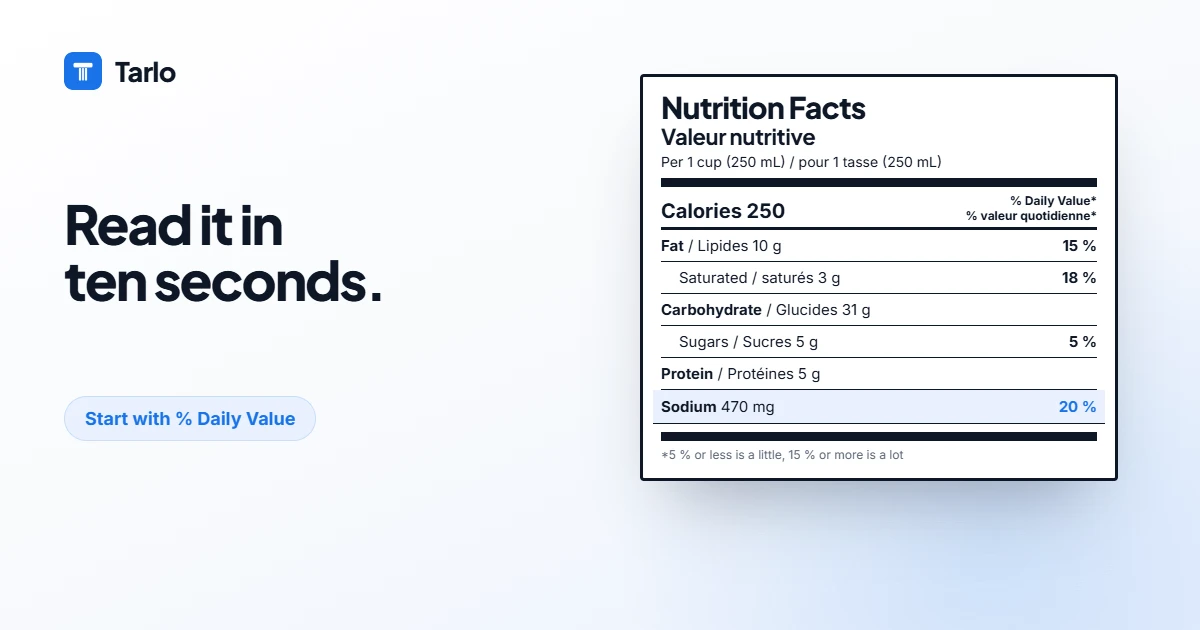
The Nutrition Facts table is the most standardized square inch in your grocery store — same order, same format, on virtually every package in Canada — and most shoppers still read it wrong, because nobody ever walks through it line by line. This is that walkthrough: what each row means, the one habit (%DV) that makes the whole table useful, what Canada’s modernization changed, and the traps that survive it.
The zero-reading alternative: Tarlo reads the table’s data on every scan and applies your rules to it. This guide is for the moments you’re reading anyway.
Start with the serving size
Every number in the table describes the serving printed at the top — “Per 250 mL”, “Per 30 g (¾ cup)”. Before anything else, ask: is that what I’d eat? A 500 mL drink with “per 250 mL” numbers is a ×2 situation. Canada’s rules pushed serving sizes toward realistic, comparable amounts, but the deeper protection is the reference amount working behind the scenes — the printed serving still deserves your first glance — and when packages quietly shrink, the unit price is your defence.
The 5%–15% rule
The single most useful habit Health Canada teaches, printed as the table’s own footnote: “5% or less is a little, 15% or more is a lot.” Every %DV line works with it — 6% DV sodium per serving is modest; 28% is a lot. This one heuristic converts the whole table from trivia into judgment, and it’s the same 15% that powers the front-of-package “high in” symbol (per reference amount). Learn nothing else and you’ve learned the table.
Line by line
Calories — energy per serving; Canada requires it big and bold. Fat / saturated + trans — the %DV covers saturated and trans combined (DV: 20 g); trans should be ~0 since Canada banned partially hydrogenated oils. Cholesterol — %DV optional; most shoppers can skim. Sodium — DV is 2,300 mg; the line where the 5/15 rule earns its keep, since processed foods concentrate here. Carbohydrate / Fibre / Sugars — fibre is the “more is better” exception (DV 28 g); the Sugars %DV (DV 100 g) was added in the modernization and sums all sugars, whatever alias they wear — though it can’t separate added from naturally occurring (plain yogurt’s lactose reads the same as syrup). Protein — no %DV in Canada (deemed adequate in Canadian diets); grams only. The micronutrient block — potassium, calcium, iron (post-modernization picks, replacing vitamins A/C) plus actual mg amounts, not just percentages.
What the modernization changed
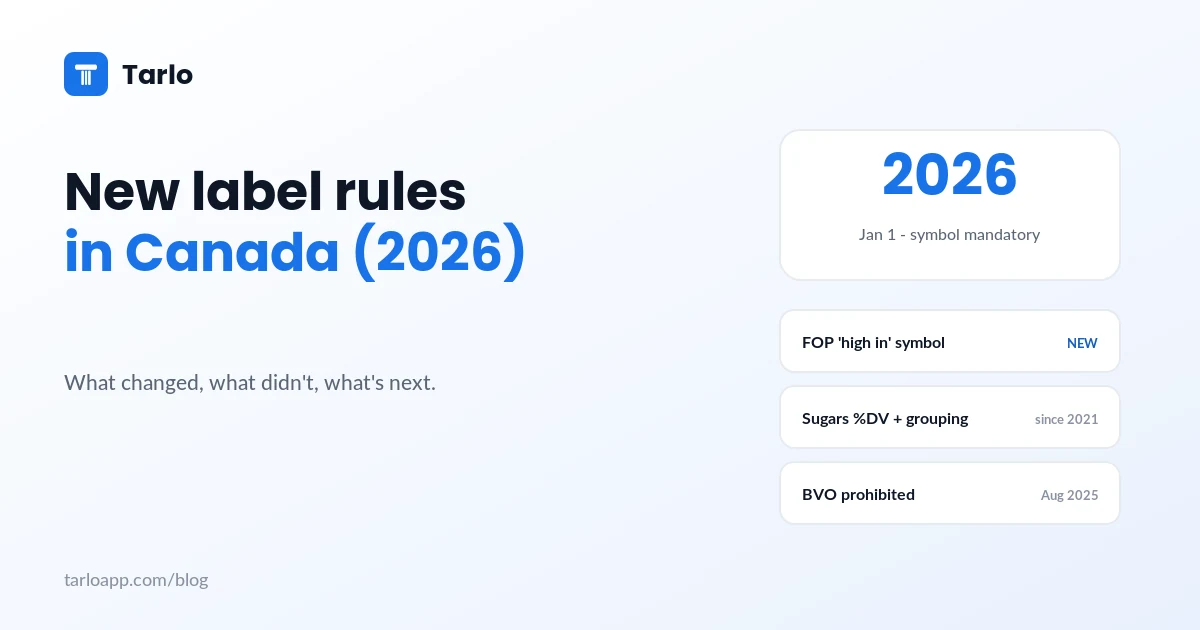
Canada’s label overhaul (phased through 2016–2021, now the only format you’ll see) made the table meaningfully better: Sugars gained a %DV; the ingredient list groups sugars-based ingredients so they can’t scatter; serving sizes were standardized within categories; potassium and vitamin D entered, reflecting actual shortfalls; the footnote rule was added; and colours must be named individually. Then January 2026 added the front-of-package symbol — effectively a pre-read of this table’s worst news, moved to the front of the box (everything that changed in 2026).
What the table can’t tell you
The table is nutrient arithmetic — it’s structurally silent on everything ingredient-shaped: synthetic dyes, sweeteners (a “0 g sugars” line says nothing about sucralose), which oils, nitrites, preservatives, maltodextrin’s fast glucose (filed under generic carbohydrate), flavour enhancers like MSG, and processing level. That’s the division of labour: table for amounts, ingredient list for substances — and a scan for both at once, which is Tarlo’s whole job: the nutrient thresholds computed properly plus your ingredient rules, in one verdict.
Frequently asked questions
Why does protein have no %DV in Canada?
Health Canada’s position: protein inadequacy is rare in Canadian diets, so a %DV would add noise, not signal. Grams are there for those tracking.
Is 0 g trans fat really zero?
Under rounding rules, “0” can lawfully hide up to 0.2 g per serving — but since Canada’s PHO ban, industrial trans fat is genuinely gone from the supply; residual traces are mostly natural (dairy/ruminant).
Sugars says 8 g but no sugar is in the ingredients — how?
Naturally occurring sugars: lactose in plain dairy, fructose in fruit. The Sugars line counts them all; the ingredient list is how you tell added from inherent.
Do restaurant meals have Nutrition Facts?
Not required nationally — the table is a prepackaged-food obligation (some provinces mandate menu calories). Restaurant food is the label-free zone, the FOP symbol’s too.
Sources
- Health Canada — Nutrition Facts table and % Daily Value: canada.ca
- Canadian Food Inspection Agency — nutrition labelling requirements: inspection.canada.ca
Tarlo reflects the rules you turn on and is for general information only — it is not medical or dietary advice. Regulatory details are Canadian and current as of the date above; always verify the product's physical label.