What's the Magnifying Glass Symbol on Food Labels?
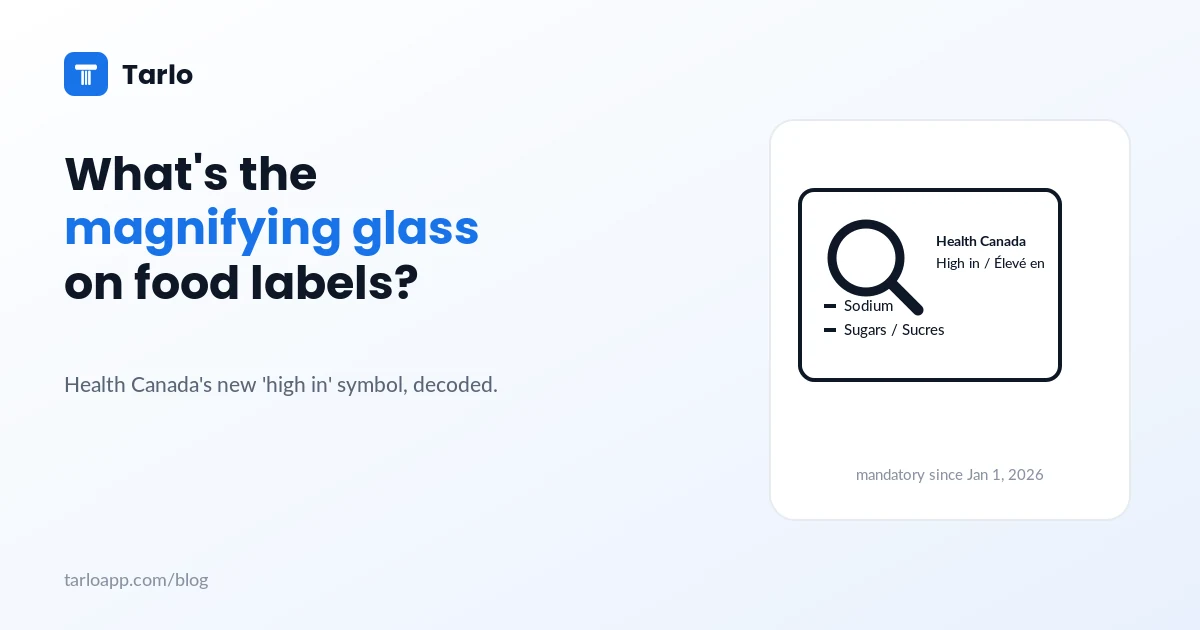
That magnifying glass is Health Canada’s new front-of-package nutrition symbol. It means the product is high in sodium, sugars, saturated fat — or several of them — by Health Canada’s official thresholds. It became mandatory on qualifying prepackaged foods on January 1, 2026, which is why it suddenly seems to be on everything. Here’s the 30-second version, then the answers to what people ask next.
Scan instead of squint: Tarlo applies the same thresholds — plus your own ingredient rules — to any barcode, free.
The 30-second version
The symbol is standardized — always black-and-white, always a magnifying glass, always front of package, always bilingual (High in / Élevé en). It fires when a food meets or exceeds 15% of the Daily Value of sodium, sugars or saturated fat per standardized amount (10% for small-serving foods like pickles and condiments; 30% for frozen dinners and other main dishes). It’s a factual threshold flag, not a score — it doesn’t rate the product overall, and two very different foods can carry the identical symbol.
That’s genuinely it. The complete guide — thresholds, worked math, aisle-by-aisle patterns, how Canada compares to Chile’s stop signs and Nutri-Score — is our front-of-package symbol deep dive.
What the words under it mean
The list under the magnifier names exactly which thresholds tripped: High in sodium (≥ ~345 mg per reference amount for regular foods), High in sugars (≥ ~15 g), High in saturated fat (≥ ~3 g) — or any combination. Three lines means it crossed all three. The Nutrition Facts table on the back carries the precise numbers.
Why some junk food doesn’t have it
Four honest reasons. Thresholds are per standardized “reference amount,” not per package — a product can sit just under the line (how that works). Exemptions exist — plain produce, plain milk, butter/sugar/salt as-is (the exemption list). Old stock sells through — 2026 is a transition year; an unsymbolled package may predate the deadline. And reformulation — some products cut sugar or sodium just under the threshold, sometimes swapping in sweeteners the symbol doesn’t track. “No symbol” ≠ “low in.”
What it doesn’t tell you
The magnifier watches exactly three nutrients. It says nothing about synthetic dyes, artificial sweeteners, seed oils, nitrites, preservatives or processing level — the ingredient-list questions. That’s the division of labour a rules-based scan closes: Tarlo computes the same three thresholds and checks whichever ingredient rules you’ve switched on, in one verdict.
Frequently asked questions
Is the magnifying glass a warning label?
Health Canada styles it as neutral information rather than a warning — a deliberate contrast with Chile’s black STOP signs. Functionally it flags the same thing: a threshold crossed.
Does it appear on restaurant food or bakery items?
No — prepackaged foods only. Restaurant meals, in-store bakery and deli items packaged on site are outside the rule.
Is it the same as the caution box on energy drinks?
Different system: supplemented foods (added caffeine, vitamins, amino acids) carry their own caution identifier. Same visual family, different rules.
Can a product with the symbol still fit my diet?
That’s your call — the symbol states a fact, not a verdict. Set the rules you care about in Tarlo and let each scan answer per product.
Sources
- Health Canada — front-of-package nutrition symbol: canada.ca
- Canadian Food Inspection Agency — nutrition symbol requirements: inspection.canada.ca
Tarlo reflects the rules you turn on and is for general information only — it is not medical or dietary advice. Regulatory details are Canadian and current as of the date above; always verify the product's physical label.